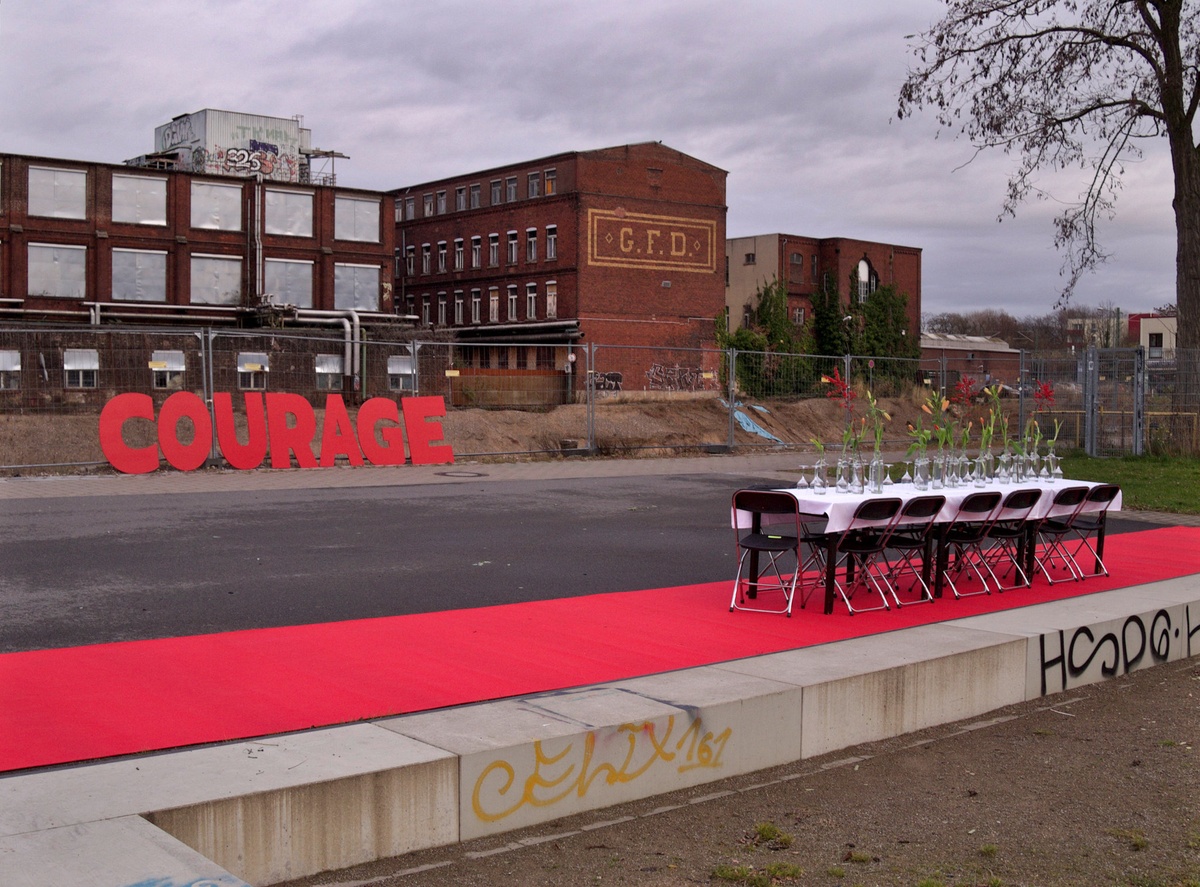
Premiere Deutsches Kunstmuseum Köln · Vermittlungs- und Interventionsprojekt von Christof Breidenich, Anja Kolacek und Marc Leßle
In the organizer's words:
The German Art Museum Cologne in the Otto & Lange Quarter in Cologne-Deutz/Mülheim is a place where art, history and the present enter into a lively dialog.
At the heart of the collection are outstanding works of fine art from the 19th century through classical modernism to the avant-garde of the 20th century. Visitors can expect a multi-layered journey through two centuries of artistic creation, which not only traces aesthetic developments, but also makes social, political and cultural upheavals visible. With over 6,000 square meters of exhibition space, it is one of the largest museums of fine art in Germany.
The museum sees itself as an open space for education, reflection and encounters in the context of the special atmosphere of its location - the former industrial halls of the Otto & Langen site. It combines historical industrial architecture with contemporary museum use. The result is an exciting place that unites tradition and transformation.
The museum regularly offers public guided tours that give visitors an in-depth insight into the exhibited works. These tours are thematically diverse and are aimed at different target groups, including families, school classes and adults. Private group tours can be booked individually and offer the opportunity to explore specific interests in greater depth.
Curatorial concept based on multidimensional levels of mediation
Places, spaces and objects in the Otto & Langen Quarter are marked and contextualized as part of research into artistic aesthetics. The focus is on the interface between the historical significance of the area and the aesthetic potential of artistic works of the avant-garde and post-war modernism. Works of art and artistic positions from the second half of the 20th century show, on the one hand, a departure from traditional forms of work such as panel painting, sculpture or plastic, and, on the other, a turn towards situationist installations and actionist performances. The result is an aesthetic of the everyday that artistically incorporates life in all its facets - an approach that is taken up and further developed at the DKMK.
The themes that artists have been exploring aesthetically since the 1950s - such as global networking, transformation, archiving, systems of order, social values and individual destinies - can also be found in the historical layers of the industrial site. Through their structural traces, the partly ruinous environments tell of everyday working life, organization, upheaval and decay through vacancy.
The aesthetic parallelism of art and site opens up a special perspective for visitors: the artworks not only provoke a new way of seeing, but also heighten awareness of the historical and social dimensions of the site. The assertion that something is art becomes the starting point of a cognitive process that combines aesthetic experience and historical reflection. This opens up a double space of experience for the recipients - a reflected understanding of art in dialog with the aura of an extraordinary historical site.
The German Art Museum Cologne is also an initiative to draw attention to the desolate state of Cologne's museums.
Price information:
Limited number of participants, pre-registration recommended: info@raum13.com
Location
You might enjoy this as well?




Events near you
Activities near you
Popular event locations
The best event recommendations for the Rausgegangen App!

Gemeinsam Events erleben
Events werden noch schöner wenn wir sie teilen! Deshalb kannst du dich jetzt mit Friends und anderen Usern vernetzen um Events gemeinsam zu besuchen. Loslegen