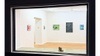
PHOTO: © Galerie Biesenbach
Stillleben - Gruppenausstellung mit KünstlerInnen: Kira Fröse, José Gomes, Vanessa Luschmann, Moritz Moll, Harry van Renswou, Rafael Triana, Hideaki Yamanobe

In the organizer's words:
Group Exhibition on the Theme of "Still Life"
We asked seven international artists: What is a still life today?
Thestill lifeis surprisingly vibrant in contemporary art—though the meaning of the genre has changed significantly.
Traditionally, a still life depicts inanimate objects: fruits, flowers, vessels, books, food, or precious items. In art history, these objects were often imbued with symbolic meaning. A wilting flower, for example, might symbolize the transience of life.
In contemporary art, however, the focus is often less on depicting beautiful objects. Instead, artists use objects to reflect on consumption, identity, memory, the environment, the body, technology, or social conditions. The still life thus becomes a kind of “mental image of things.”
An important difference from the classical tradition is that the object itself does not necessarily have to be depicted. An artist can, for example, photograph food, arrange it in an installation, or use it to build a sculpture.
In this process, even the most ordinary things can become interesting:
- Plastic packaging and disposable products
- Smartphones and electronic devices
- Fast food and supermarket products
- Clothing and personal items
- Flowers, plants, and organic materials
- Trash and used items
- Artificial or digital objects
Everyday objects are removed from their familiar contexts and suddenly become worthy of consideration.
A particularly important area is the examination of consumer society. An arrangement of brand-name products, for example, can appear both attractive and critical at the same time.
One might ask: Why do we desire certain things? What do our possessions say about us? And what happens to these things when we no longer need them?
In this way, contemporary art certainly builds on the tradition of classical still lifes. There, too, objects spoke of prosperity, social status, and lifestyle—only today they might be brand-name packaging, sneakers, or electronic devices instead of silver goblets and exotic fruits.
However, transience remains a central theme. Nor has the classic vanitas motif disappeared by any means. Flowers, fruits, food, and other perishable materials continue to be used to reflect on time, aging, death, and change.
However, the meaning can expand: A wilted plant today, for example, can symbolize not only human death but also climate change, ecological destruction, or the fragility of habitats.
In simple terms, one can view this history as a shift:
17th century:
“These things are transitory—remember death.”
19th/20th centuries:
“How can I see and represent objects?”
Present:
“What do these things reveal about our society and about me?”
This is, of course, a gross oversimplification, but it clearly illustrates the evolution.
Perhaps this is precisely what makes the still life so relevant today: We live in a world shaped by objects. We buy, collect, photograph, use, discard, and digitize them. Objects carry memories and emotions, but they also have economic and ecological value.
The contemporary still life brings these seemingly trivial objects into focus and ultimately asks: What does an object mean to a person—and what does the world of objects reveal about our times?
Accessibility information
You can find everything about accessibility at Rausgegangen here.
Location

4 more dates of Stillleben - Gruppenausstellung mit KünstlerInnen: Kira Fröse, José Gomes, Vanessa Luschmann, Moritz Moll, Harry van Renswou, Rafael Triana, Hideaki Yamanobe
Wednesday, 14. October
Select a date:
Thursday, 15. October
Select a date:
Friday, 16. October
Select a date:
Saturday, 17. October
Select a date: