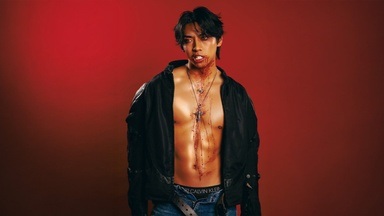
FOTO: © Alfonso “JP” Gomez
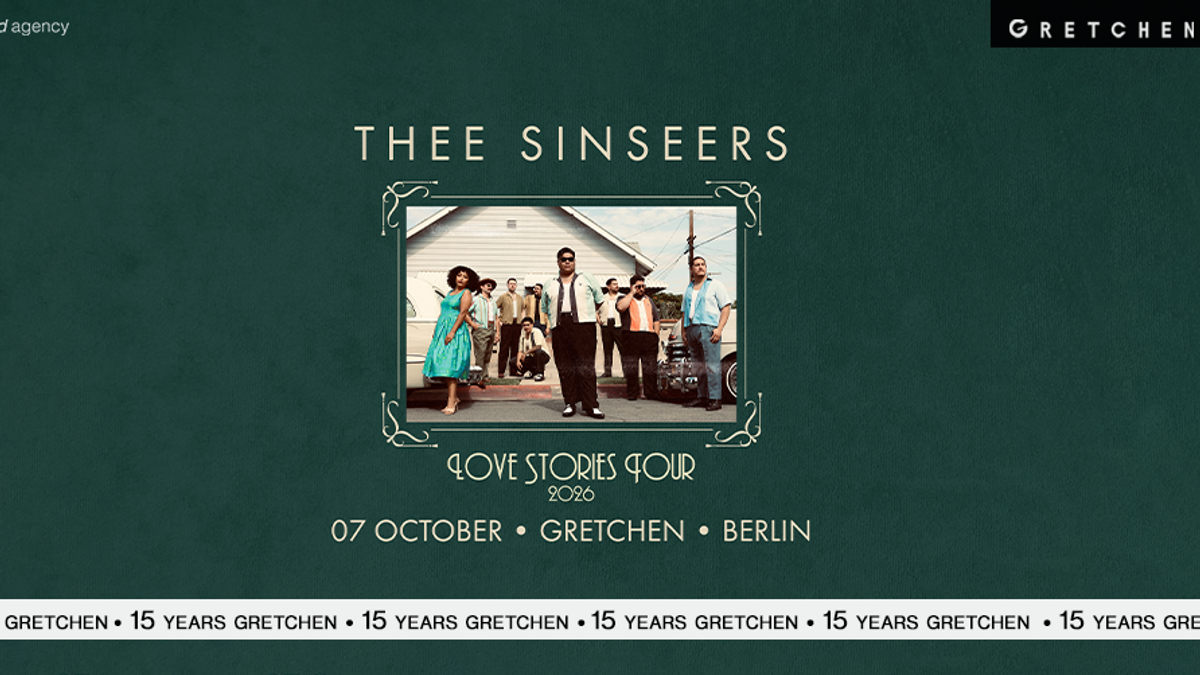
15 Years GRETCHEN: Thee Sinseers

Das sagt der/die Veranstalter:in:
Thee Sinseers *live*
Präsentiert von COSMO
To say that Thee Sinseers play oldies would be a misnomer. Fronted by bandleader and son of East Los Angeles Joey Quiniones, the group has quietly chipped away at the sounds of R&B and soul since forming in 2019. Quinones and his crew have continuously created a distinctive vibe that explores all aspects of a timeless genre, bringing together their interpretation of music through an unmistakable modern lens.
Catching up with Thee Sinseers ahead of their new Colemine Records release, ‘Love Stories’ (out September 18th), one thing becomes abundantly clear: this is not an LP that explores a neat and tidy love story. The vision of love put forth on this record is full-spectrum. Think of the seminal 1993 East LA film Blood In Blood Out — three protagonists bound together through hardship, strife, and diverging roads, who ultimately circle back to reckon with why they remain. It's a similar story here. ‘Love Stories’ isn't interested in the happy ending. It's interested in everything that comes before it, after it, and in spite of it.
Of course, none of this is accidental. More than a new record, ‘Love Stories’ is a portrait of a band that has finally grown into itself — one that knows exactly who it is and isn't shy about saying so. As Quiñones puts it: "It's a solidifying statement of where we are now. This is our style."
Bassist Christopher Manjarrez described that confidence as something you can hear: "Everything was just that notch up." In contrast to Sinseerly Yours, which had developed organically from a four-piece into an eleven-member ensemble, ‘Love Stories’ was built from the ground up as a collective effort — every role established before the band entered the studio. "We went in knowing these are the roles that are gonna be played by these people," Quiñones says. "Everybody was considered wholeheartedly in every arrangement aspect."
That collective approach extended into the sonic choices themselves. Every member zoomed out — listening not just to their own parts but to the record as a whole, what Quiñones calls thinking like "a beautiful painting" rather than a collection of individual tracks. With that foundation in place, the band handed the final mix to engineer Kelly Finnigan. "We could get so far with our opinions," Quiñones admits, "but at the end of the day there's still 10 or 11 of us trying to figure out what's right." The band also leaned into earthier instrumentation — standup bass, guitars run through amplifiers for a warmer sixties-adjacent tone — pulling inspiration from wherever it presented itself, even the most unlikely of places. It's that cross-genre thinking that Quiñones sees as the record's defining quality. "It didn't feel like we were making soul music at any point," he says. "It felt like we were making our music."
But the sonic ambition of ‘Love Stories’ only tells half the story. The band sought to capture something more honest than a highlight reel — showcasing the highs and lows of romantic
relationships while expanding the frame to include the familial, the complicated, and the unresolved. On "Let's Fall In Love (Again)," Quiñones's protagonist pleads for a second chance before stopping mid-song to acknowledge his own role in the heartbreak — trading wishful fantasy for something far more honest. It's that kind of emotional candor that runs throughout the record. The band's parents appear in the album art, their own love stories folded into the record's visual identity, some of those stories still standing, others not. As Manjarrez puts it: "Every single song title directs you down a different road of love — whether you win or lose." Quiñones wanted listeners to sit with that ambiguity. "Love is never-ending," he says. "It stretches beyond lifetimes. I want people to still be confused — I want it to be left like an open book."
To achieve what they're reaching for, every member of Thee Sinseers has had to check their ego at the door — and mean it. "The sense of ego is, in a weird way, non-existent when it comes to recording and writing," Quiñones says. "We're all fans of each other at the end of the day." It's the kind of trust earned on the road, forged through years of shared miles and close quarters — and reflected in a lineup that welcomed new additions seamlessly, including expanded roles for familiar faces and string arrangements from newcomer Skip Heller that push the songs into new territory.
That spirit of trust extends to their partnership with Colemine Records, built on patience and creative freedom. "Terry's like a homie," Quiñones says. "He gives us his input but we get a lot of freedom because he trusts us." For a band still actively defining itself on its own terms, that kind of label support isn't just appreciated — it's essential.
Yet one thing remains constant throughout: Thee Sinseers' commitment to where they come from. That East LA identity doesn't announce itself — it simply exists, woven into the fabric of the music without being worn as a badge. As Francisco Flores puts it: "We're from here. You can hear it a thousand miles away. You can't deny it — but we don't try to. It just comes out that way." Nowhere is that more apparent than on "Minute by Minute," which Quiñones describes as the album's most neighborhood-feeling moment — a slow dance number that conjures the gymnasiums of Roosevelt and Garfield High, intimate and unhurried, like a memory you didn't know you were making. There's no performance of heartbreak here, just the real thing.
Like an unsent love letter finally delivered, ‘Love Stories’ carries the weight of everything that was felt but never quite said. The universality of that feeling is perhaps best captured in Quiñones's own words: "It's never too late to change. It's never too late to tell a person you love that you love them." After any song on this record, Eric Johnson says, there's really only one appropriate response. "Damn."

Angaben zur Barrierefreiheit
Für dieses Event liegen uns keine Infos zur Barrierefreiheit vor.
Alles zum Thema Barrierefreiheit bei Rausgegangen findest du hier.
Vielleicht gefällt dir auch das?












Noch mehr Events dieser Location-Page