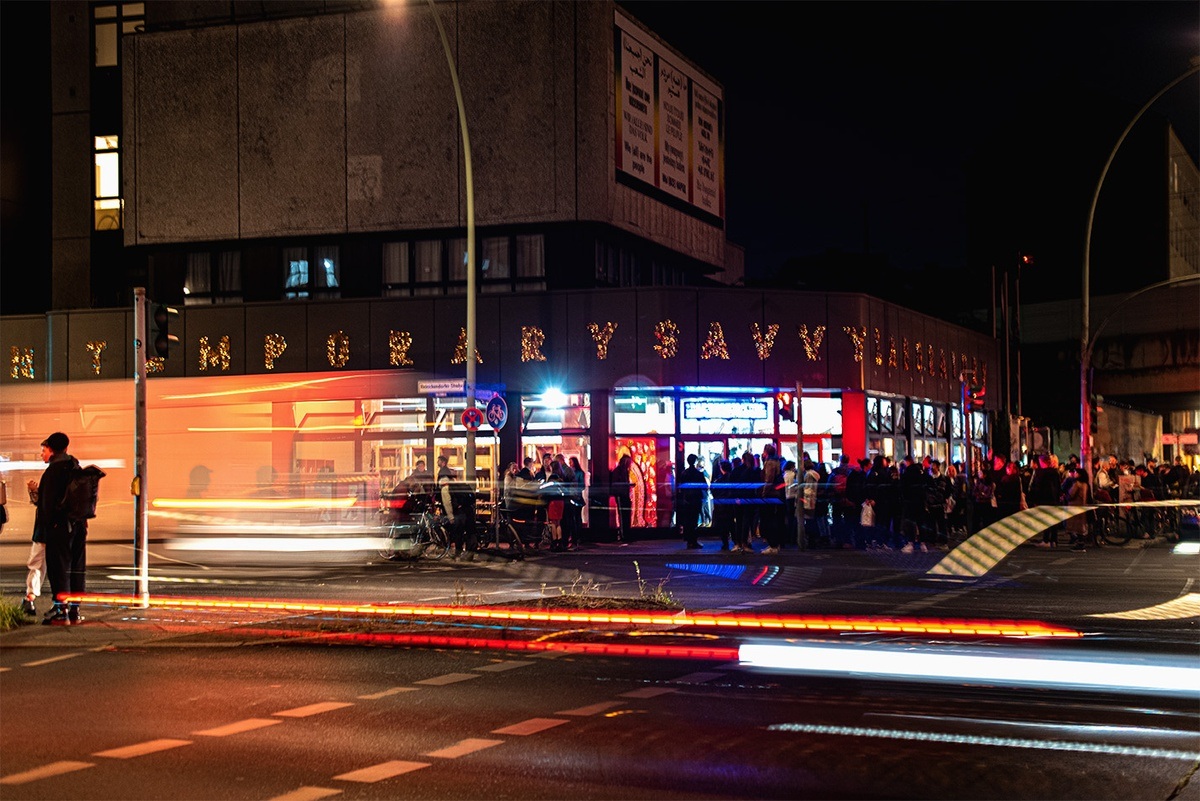
Witness Clay // Clay as Witness

Das sagt der/die Veranstalter:in:
PRESENTATION & WORKSHOP 13.06.2025 19:30
WITH Amara Abdal Figueroa in conversation with Maïa Beyrouti
LANGUAGE The event takes place in Spanish, English, Arabic, and all languages present
FREE ENTRY Donations welcome
ACCESS SAVVY is accessible by wheelchair
Join us for a presentation and workshop alongside our resident artist Amara Abdal Figueroa in conversation with Franco-Palestinian artist Maïa Beyrouti to share a moment and ask ourselves questions around the idea of clay as witness,* and explore how we witness clay. What does this act of witnessing mean? What is being witnessed? Where are the subjective tendencies of material? Of the human? This is not an act of discovery, not a drive towards conservation, but towards a shared process of listening with our hands.
Together with Jorge Vega Matos and Maïa Beyrouthi, Amara Abdal Figueroa travelled to an abandoned clay mine in Brandenburg and collected various raw materials that had fallen from a stratified clay cliff. The layers of colors revealed a reading of the material through time, and in this workshop the artist invites you to explore the notions of time and witness, in direct contact with these collected materials.
In essence, clay is formed from the weathering of rock. It is a particle that can take thousands or millions of years to form, which is in essence the time it takes for the rock to decay – to transform. As humans, we usually don’t perceive rocks as anything more than a hard, inanimate object – we are not granted the time to witness its transformation. Our time on this earth is insignificant compared to the forming of clay. We are ladybugs passing through a sliver in time, privileged in our interactions with this ancient matter. What has the clay witnessed? And when we have the audacity to give it form anew, what does it call for us to create?
Amara works with clay as a collaborating entity – a negotiating entity. Clay has its own material desires. It might reject us, it might dry too slowly, too fast. It demands a dialogue, a constant adaptation to its needs and demands. It demands of us that if we seek to wield it, to mold it, we must first and foremost listen to it.
Location
Vielleicht gefällt dir auch das?








Veranstaltungen in der Nähe
Unternehmungen in der Nähe
Beliebte Veranstaltungsorte
Die besten Rausgeh-Tipps in der Rausgegangen App!
