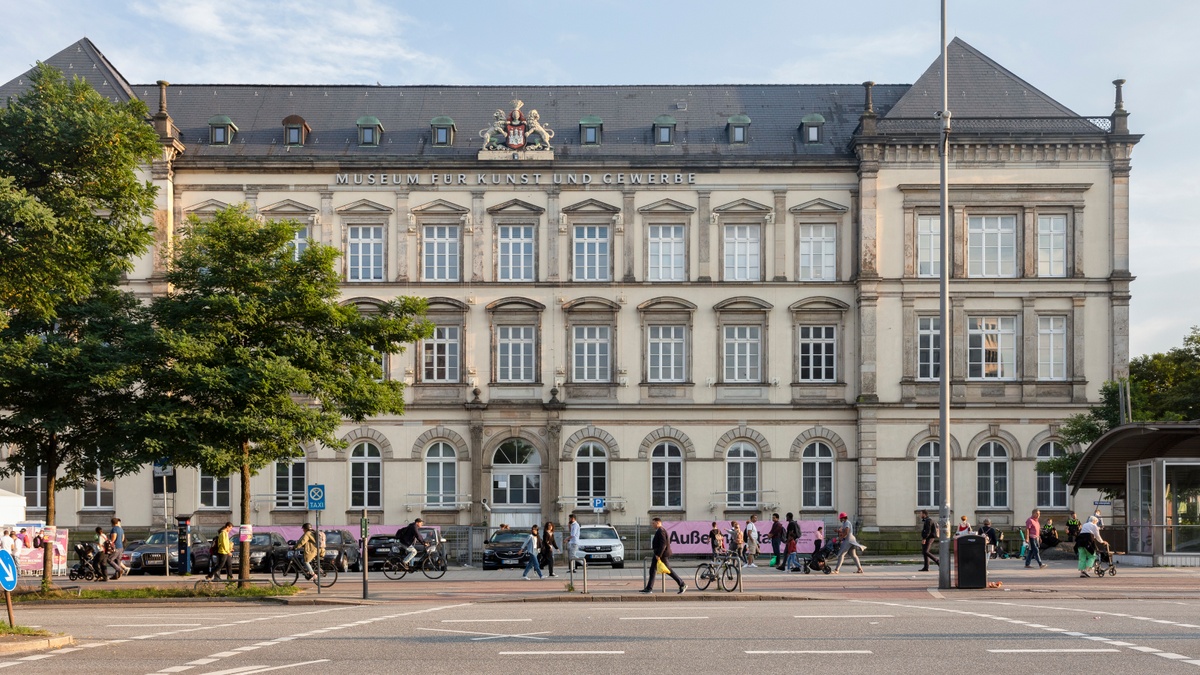
1. Themenkonzert: Musik und Wissenschaft
In the organizer's words:
Lecture: Florian Zinnecker (DIE ZEIT): "Our disaster language: How politicians and journalists describe current crises"
Niels Wilhelm Gade: Excerpt from String Sextet in E flat major op. 44
Hanns Eisler: Prelude and Fugue on B-A-C-H op. 46 for string trio
Antonín Dvorák: String sextet in A major op. 48
Violin: Solveigh Rose
Violin: Kathrin Wipfler
Viola: Yitong Guo
Viola: Tomohiro Arita
Violoncello: Tobias Bloos
Violoncello: Saskia Hirschinger
"Language" is the theme of our three-part series of events "Music and Science". We know that there are countless languages among people, depending on whether they belong to family groups, extended family groups or associations and societies. We speak of natural languages. They serve the purpose of understanding among people, of communication, and at the same time signify demarcation in their respective characteristics. Of course, these boundaries are overcome by acquiring and learning the other language.
We know that language is part of our everyday lives. It functions as an essential means of communication. But it is more than that! It is an expression of personality and it sounds different every time it speaks of suffering or joy, of love or hate. Language is in a state of flux, changing in line with real circumstances and conditions - and it does so constantly, continuously!
A concert event today, based on various works from the classical, romantic and modern periods, makes it immediately clear and understandable to the listener that messages, moods, experiences of hardship and joy are expressed in different musical languages, different work formats.
Similarly, after a few bars of a composition, we hear not only which epoch it comes from, but also which individual musical language elements it is based on. Whether it is the music of Igor Stravinsky, Antonín Dvoák or Bohuslav Martin or whether it was written by Hanns Eisler. Nevertheless, all these compositions and creations reveal not only something different, but above all something they all have in common, namely their ties to a superordinate order in material and structure, in tonality and formal essences. It is precisely these universal ties that form the basis for us to speak of music as a "universal language".
Location






Events near you
Activities near you
Popular event locations
The best event recommendations for the Rausgegangen App!
