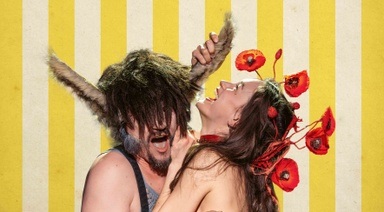
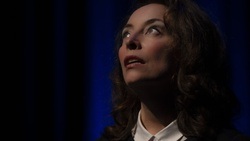
PHOTO: © SAM Entertainment
ANNES KAMPF - Anne Frank vs. Adolf Hitler
In the organizer's words:
Adolf Hitler knew nothing about Anne Frank, but she knew everything about him.
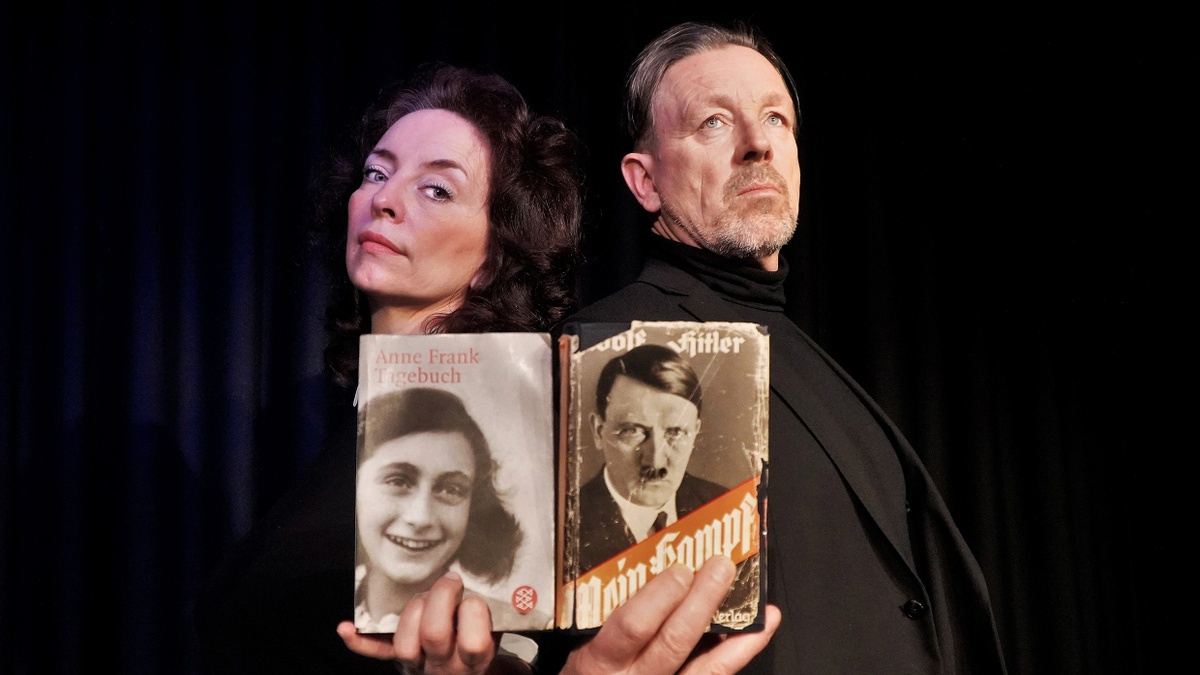
It is Hitler's "Kampf" that tells and ends the story of Anne Frank. She died in the Bergen-Belsen concentration camp at the end of February, beginning of March 1945. What remains is her diary, which meets Hitler's "Mein Kampf" in a sharply edited collage.
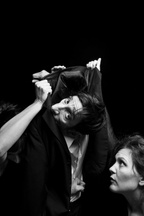
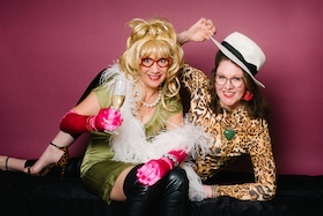
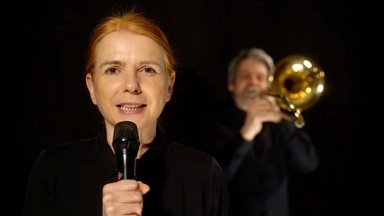
Cabaret artist and singer Marianne Blum and actor Thomas Linke approach the two books with respect and sensitivity.
Through their outstanding artistic performance, they bring the historical reality to life and turn the encounter between the two texts into a powerful theatrical experience. The two artists let the two protagonists speak for themselves. Not a word is invented. The juxtaposition of authentic voices is enough. The emotions generated by ANNES KAMPF are not a side effect, but the central artistic means. Those who expose themselves to the force of this experience cannot step back from their own knowledge without running into an inner contradiction. You can no longer "have known nothing". For the intention of the leader and his misanthropic ideology is clear and the consequences for a single small life are undeniable.
Just as the past comes alive here, the connection to the present becomes obvious. The similarities between Hitler's rhetoric and the language of today's right-wing extremists is a fact. But ANNES KAMPF also makes the terrible intention behind the words palpable: the murder of a homogeneous ethnic community.
At a time when this ideology, which constructs a national community based on blood and soil, is regaining strength, when right-wing extremists are hiding behind a bourgeois mask and allowing themselves to be elected to our parliaments, it is important to show the struggle of the small diary against the great dictator in order to once again develop a sense of and an ear for our history. Because history is always made up of stories. And stories are made up of destinies.
The collage is musically complemented by authentic Yiddish songs (some of which were written in the ghetto or labor camp), German hits, popular songs and songs of perseverance from the time, sung live by Marianne Blum. They not only add the authentic sound of the time to the play, they also bring the entirety of the persecuted onto the stage in an impressive way, of which Anne Frank is a prominent example.
This is a real-life history lesson and powerful literatainment!
"The artists have not only brought a piece of German history to the stage, but have also impressed with a great performance." FZ
"Both actors cast a spell over the audience" Volksstimme
"A disturbing, harrowing and at the same time magnificent performance by the two artists. (...) In addition to stumbling blocks and other places of remembrance, we need events like this to give us strength and courage and provide us with arguments in our commitment against racism, anti-Semitism and xenophobia." Robert Gilcher Historian
Location
Accessibility information
We don't have any accessibility information for this event.
You can find everything about accessibility at Rausgegangen here.
Artist | Musician
Organizer