


PHOTO: © Universal
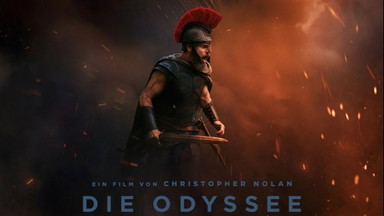
Die Odyssee (OmU, 70 mm)
In the organizer's words:
Our theater was built for films like this: Christopher Nolan’s immersive vision of Homer’s *Odyssey*, presented exclusively in the breathtaking 70mm format.
Christopher Nolan’s “The Odyssey” tells the story of Odysseus’s return home as an existential journey through war, loss, and identity. After the fall of Troy, the hero wanders across seas and islands, facing dangers, temptations, and his own exhaustion. Meanwhile, in Ithaca, Penelope struggles to maintain stability, while Odysseus increasingly doubts whether he can even return home after years of survival. Nolan focuses less on the mythological episodes than on the inner turmoil of a man who has lost himself.
The real showstopper, however, lies in the format: “The Odyssey” was shot entirely in IMAX, a move that remains unprecedented to this day. Nolan uses the large-format 65mm negative not only for spectacle but for radical immersion. The vastness of the sea, the confinement of the ships, the physicality of survival—all of this unfolds with a sharpness and spatial depth that only IMAX cameras can achieve. As with “Dunkirk,” “Interstellar,” and “Oppenheimer,” Nolan relies on analog 70mm projection, which presents the film on our curved Cinerama screen as a physical, almost sculptural experience. For him, celluloid is not an object of nostalgia, but a tool for making time, space, and perception sensually tangible. Nolan combines Homer’s epic with his signature style: fragmented temporal structures, subjective perception, and moral ambivalence. The mythological elements do not appear as fantasy, but as an expression of a traumatized consciousness. The score—once again closely interwoven with the visual rhythm—works with breath, pulse, and the roar of the sea. Thus, “The Odyssey” becomes less a classic literary adaptation and more an audiovisual state of emergency that explores the boundaries of the cinematic space. A work that demonstrates why Nolan is among the last directors to defend—and further develop—cinema as a physical, analog experience.
Location

Weitere Termine von Die Odyssee (OmU, 70 mm)












Noch mehr Events dieser Location-Page