Gauthier Dance JUNIORS// Theaterhaus Stuttgart: Radical Classical
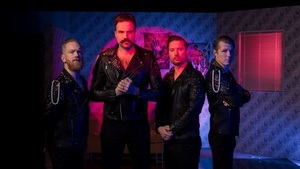
In the organizer's words:
Choreographies by Aszure Barton, Mauro de Candia, Marie Chouinard, Eric Gauthier, Marco Goecke, Andreas Heise, Ohad Naharin
Which art form combines classical music and movement? In a quick poll on the street, almost everyone would surely answer "ballet". The dance evening Radical Classical aims to show just how fascinating the not-so-rare combination of contemporary dance and classical music can be. The means of choice: contemporary "classics" by famous choreographers. The added media value in the breaks between the dance: specially produced explanatory films that illuminate each piece of music from a different angle. Developed by Eric Gauthier and dramaturge Thomas Geiger, the focus here is partly on the instruments, partly on the composers and partly on the performing artists. And although these short documentaries should be of interest to the whole audience, Eric Gauthier had a specific target group in mind when planning this program: Young people who normally have little exposure to classical music. The signs are good that Radical Classical will not only inform them, but also inspire them. After all, the Gauthier Dance JUNIORS are not just the ultimate popular performers. In this extremely demanding program, both in terms of performance and technique, they prove just how radical classical music can be.
With her pas de deux from Lascilo Perdere (A journey of letting go), originally created in 2005 for her own company AB&A, Aszure Barton is likely to have broken a record - for the longest and most daring French kiss scene in a dance piece. To the hypnotic music of Antonio Vivaldi's Nisi Dominus - Cum Dederit , the new artist in residence binds a couple in an almost physically impossible intertwining for the entire duration of the piece. Vivaldi has never been danced like this before!
The big bang of modern dance: Nijinsky choreographed his iconic dance piece L'Après-midi d'un faune for the Ballets Russes in 1912. The musical template was the impressionist masterpiece by Claude Debussy. Inspired by Nijinski's ground-breaking choreography and historical photographs showing him in his starring role, Marie Chouinard created her own version for a faun, which can also be considered a key work in her oeuvre. With the first notes of Prélude à l'après-midi d'un faune , the solo transports us into a mythical, archaic, literally inhuman world. How and what does a mythical creature dream? The Canadian dance avant-gardist shows us.
Marco Goecke's work is also about a mythical creature. The work is also closely linked to the history of the Ballets Russes at the beginning of the 20th century. The long-standing artist in residence at Gauthier Dance created this pas de deux to mark the 100th anniversary of Igor Stravinsky's Firebird. In Goecke's typically feverish, hyper-precise movement language, with fluttering hand and jerky head movements, the choreographer tells the story of a rapprochement between man and bird.
Britten, Handel, Mozart, Schütz, Purcell, Schubert, Wagner ...: Few choreographers have explored classical music, and opera in particular, as thoroughly as Andreas Heise. Frühlingsstimmen also looks beneath the surface. On the one hand, the exuberant bliss of Johann Strauss Sohn's classic waltz, the exhilaration and beauty of awakening nature. On the other, doubt and skepticism, a marionette-like scene with dancers who move as if remote-controlled. And the pressing question: where are the fault lines in a supposedly intact world?
Hardly any other piece of music has been translated into dance as often, as differently and as creatively as Maurice Ravel's Boléro. Ohad Naharin was also inspired by this iconic piece - on his own terms ... Not only does the title B/olero contain a slash, the Godfather of Gaga also opted for a synthesizer arrangement by Japanese composer Isao Tomita. With his powerful, relentlessly synchronized duet, Naharin achieves a real feat: demanding flawless precision from the two dancers - and at the same time discovering the comedy in the movement sequences that whirr like clockwork.
Eric Gauthier 's Orchestra of Wolves also has a good dose of humor. Set to the first movement of Ludwig van Beethoven's Symphony No. 5, this miniature comedy presents the much-vaunted conflict of authority between conductor and orchestra with a wink. In the professional music scene, this is usually a struggle between two halfway equally strong opponents. The only problem is that in this piece the conductor is a bird and the orchestra is made up entirely of wolves ...
Michel Fokine's The Dying Swan from 1905, adapted by Eric Gauthier, has been an essential part of every MOVES FOR FUTURE Mobil show from the very beginning. Originally created for the prima ballerina Anna Pavlova, the solo set to the dreamy music of Camille Saint-Saëns' The Carnival of the Animals became the epitome of classical ballet. With La Morte del Cigno, Italian choreographer Mauro de Candia takes a truly radical new look at the iconic work. In his interpretation, the dying swan is not personified by a delicate ballerina in a tutu, but by a male dancer.
Age recommendation: From 16 years.
The performance contains depictions of sexual content.
Price information:
Cat. 1: 30,- / reduced: 21,- // Cat. 2: 22,- / reduced: 14,- €
Location
You might enjoy this as well?










Events near you
Activities near you
Popular event locations
The best event recommendations for the Rausgegangen App!

Gemeinsam Events erleben
Events werden noch schöner wenn wir sie teilen! Deshalb kannst du dich jetzt mit Friends und anderen Usern vernetzen um Events gemeinsam zu besuchen. Loslegen