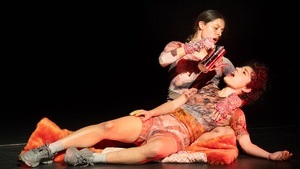
In the organizer's words:
Throughout his life, Franz Kafka wrestled with the question of what being Jewish meant to him. Growing up in an assimilated family, he associated his sporadic visits to the synagogue with compulsion. The religious rules, their interpretations and stories alienated him at least as much as they fascinated him. It is hardly surprising that it was Jewish culture, art or, more precisely, theater in Yiddish that gave Kafka the first impetus to approach Judaism.
In the autumn of 1911, Kafka regularly attended the performances of an Eastern Jewish theater group. Their tragicomic narrative style, the mixture of song, dance, drama and the self-explanatory use of Yiddish demonstrably influenced his writing.
Against this backdrop, opera director Barrie Kosky stages Kafka's most famous novel "The Trial" and other texts as an examination of Kafka's Judaism in German, Yiddish and Hebrew, each with German subtitles and - of course - with lots of music! For the seriously ill Kafka himself, this confrontation, which was always fraught with guilt and shame, only led, if not to redemption, then at least to a kind of consolation through his encounter with Dora Diamant in the last year before his death.
Kosky's artistic work is permeated by an ongoing interest in giving the public access to lesser-known areas of Jewish culture. In this spirit, the former artistic director of the Komische Oper Berlin is continuing his collaboration with the Berliner Ensemble following his successful production of "The Threepenny Opera".
This content has been machine translated. Terms and Conditions for lotteriesLocation
You might enjoy this as well?





Events near you
Activities near you
Popular event locations
The best event recommendations for the Rausgegangen App!

Gemeinsam Events erleben
Events werden noch schöner wenn wir sie teilen! Deshalb kannst du dich jetzt mit Friends und anderen Usern vernetzen um Events gemeinsam zu besuchen. Loslegen