Seltene Erden - 17 Bruchstücke
In the organizer's words:
An artistic intervention by Philine Rinnert in collaboration with the Netzwerk Naturwissen - May 5-11, 2026 on the grounds of the Museum für Naturkunde Berlin
SCANDIUM, YTTRIUM, LANTHAN, CER, PRASEODYM, PROMETHIUM, NEODYM, SAMARIUM, EUROPIUM, GADOLINIUM, TERBIUM, DYSPROSIUM, HOLMIUM, ERBIUM, THULIUM, YTTERBIUM, LUTETIUM - 17 special metals, indispensable for digitalization, high technology and the energy transition. At the same time, they are associated with considerable ecological, health and geopolitical conflicts. Their extraction usually remains invisible, outsourced to other regions of the world and embedded in global power relations.
From May 5-11, 2026, the artist Philine Rinnert will open a week-long excavation site on the grounds of the Museum für Naturkunde Berlin. In collaboration with the Netzwerk Naturwissen, a resonance space for the 17 rare earths will be created: a place between art, science and social discourse.
The starting point is the Baotou Rare Earth Museum in Baotou, northern China, which will open in 2022 in the world's largest mining area. Officially, it tells the story of the global rare earth industry. But what is made visible there - and what remains hidden? "17 Fragments" transfers this question to the Museum für Naturkunde Berlin. The intervention is not an exhibition of ready-made answers, but a tectonic landscape of sound, light and material and a place of questions. Visitors move through fragments and empty spaces, become co-creators themselves and enter into a relationship with deep geological time, the origin and future of rare earths.
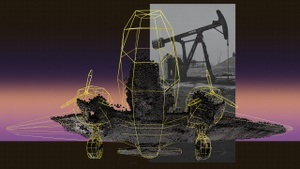
With photographs, sketches, models, light, sound and smell,"17 Fragments" develop: sensual, performative and participatory approaches to a highly complex subject area. There will be an accompanying program:
- Tuesday, May 05 18:30: Panel discussion and opening | Atlas Naturwissen
- Wednesday, 06.05. and Thursday, 07.05., 13-14 h
Table Talks in the Mineral Hall: Together with the artist, the colleagues Ina Heumann (Humanities of Nature) and Ralf Thomas Schmitt (Mineralogy) will enter into an open exchange with visitors about collecting practices in the museum. - Thursday, May 7 at 6 p.m.: Film Worlds of Science | Atlas Naturwissen
- Monday, May 11, 9:30 am - 1:30 pm: Scenario workshop for school classes | Atlas Naturwissen
Further information and registration: https://atlasnaturwissen.de/de/aktuelles/seltene-erden-17-bruchstuecke
Price information:
The intervention is not located directly in the museum and can be visited separately. If only the intervention is visited, this is possible free of charge. For a combined visit with the Museum für Naturkunde, a regular museum ticket must be purchased.
Location
Organizer | Miscellaneous







Events near you
Activities near you
Popular event locations
The best event recommendations for the Rausgegangen App!
