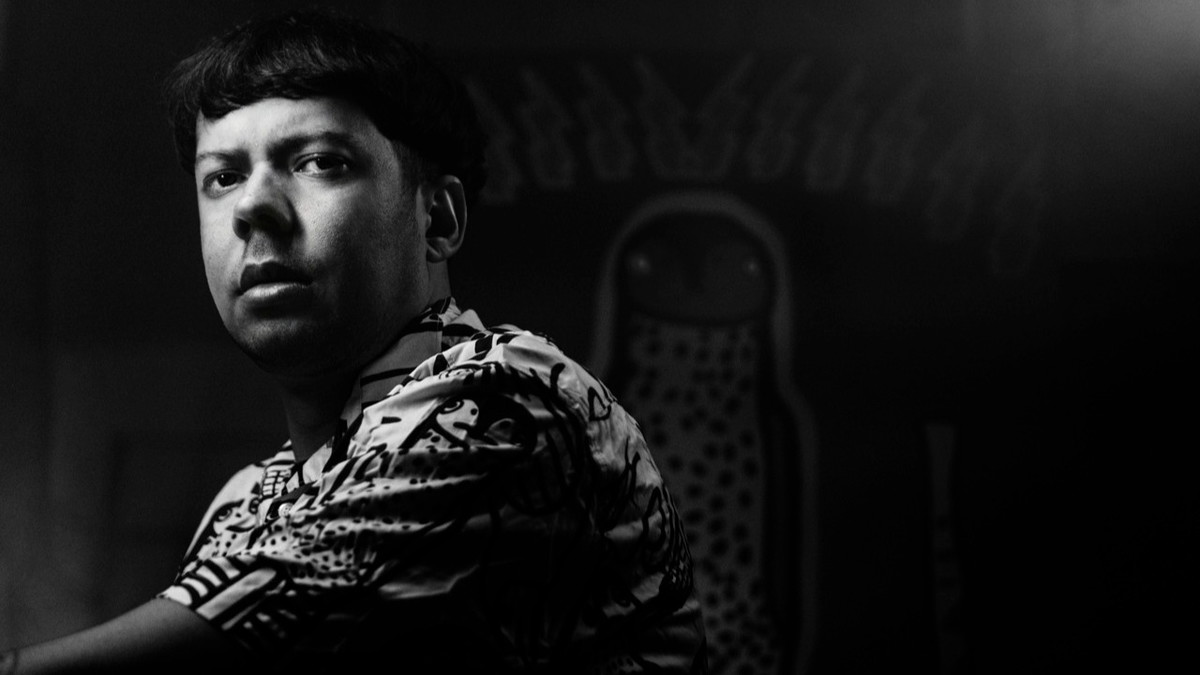
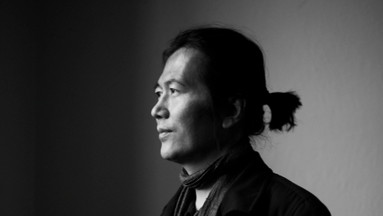
PHOTO: © Xadalu Tupã Jekupé © Denison Fagundes
Tränen des Himmels, Tränen des Abwassers
In the organizer's words:
In the guest room, Xadalu Tupã Jekupé and Andrea Scholz talk about the Ybiracy River. In doing so, they reflect on the tension between Indigenous cosmotechnologies (practices of experiencing, appropriating, and preserving the world) and Western perspectives on property and heritage.
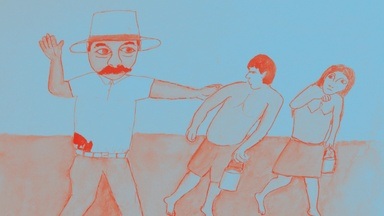
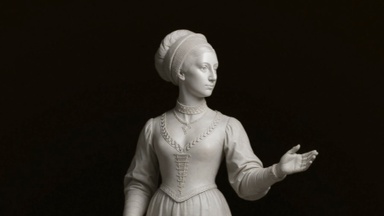
The Ybiracy River once flowed through the southern Brazilian city of Porto Alegre; people made use of its water and the paths along its banks in a variety of ways. As the city grew, the river was increasingly displaced by urban development and was eventually channeled underground during the construction of a shopping center. While the river was thus condemned to invisibility, the city government erected a statue depicting a woman’s body and bearing the name Ybiracy. The transformation of a living entity into a cultural heritage site is part of capitalist appropriation practices in Western society.
But Ybiracy cannot be erased. When the sky weeps and it rains, the underground river overflows its concrete channel, and the violence of appropriation comes to light as wastewater.
Participants
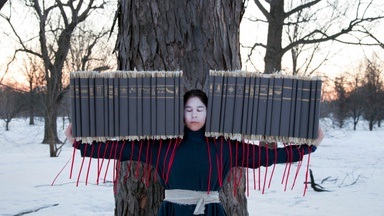
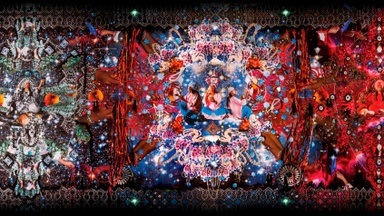
Xadalu Tupã Jekupéis an Indigenous (Guarani) artist born in Alegrete (RS) in southern Brazil, an area historically inhabited by the Guarani Mbyá, Charrua, Minuano, Jaro, and Mbone peoples. His career is closely linked to the legacy and tensions left behind by the missionary system in South America, particularly in the context of the Estancia Yapeyú during the era of the Jesuit missions. He explores what is known as the “Guarani missionary Baroque,” which he reinterprets in a contemporary context as a living form of Indigenous art. At the same time, his work engages with the processes of erasure resulting from catechization, wars, and colonial uprisings, transforming them into visual narratives that articulate memory, spirituality, and resistance. In doing so, his practice evolves into a symbolic field of engagement where myth and ritual enter into dialogue with the present to challenge the boundaries of coloniality.
His most recent solo exhibitions include: “O Jardim Guarani” (Centro Cultural São Paulo, 2022); “Antes que se apague: territórios flutuantes” (Fundação Iberê Camargo, Porto Alegre, 2022); “Invasão Colonial Yvy Opata: A terra vai acabar” (Museu das Culturas Indígenas, São Paulo, 2022); “Tekoa Xy: A Terra de Tupã” (Instituto Inclusartiz, Rio de Janeiro, 2022); and “Portal Sul: Tucum” (Centre Intermondes, La Rochelle, France, 2021).
He has received awards such as the Humanities Award (2014) in recognition of his commitment to indigenous and sociocultural causes; the Açorianos Visual Arts Award (2019) in the “Emerging Artist” category; as well as nominations for the PIPA Prize (2022 and 2024).
During his residency at the Collaborative Museum/Humboldt Forum in June 2026, Xadalu Tupã Jekupé is preparing a series of images for the exhibition “Tributaries: Cosmotechnologies of Water.” It will open in November 2026, marking the launch of the two-year program focus “Mine.Yours.Ours?!” on ownership and heritage at the Humboldt Forum.
Andrea Scholzis the curator for transcultural collaboration at the Ethnological Museum and the Museum of Asian Art in Berlin. She is a trained anthropologist specializing in the Amazon and has been working for 10 years on various collaborative projects with Indigenous communities and educational initiatives, primarily in Latin America.
Xadalu Tupã Jekupé will be a CoMuse Fellow at the Ethnological Museum and the Museum of Asian Art in June 2026.
CoMuse – The Collaborative Museum is an initiative of the Ethnological Museum and the Museum of Asian Art that aims to develop multi-perspective approaches to collection-based research and to test new formats for collaborative processes in order to sustainably intensify the decolonization and diversification of museum practice.
The CoMuse Fellowship Program is supported by Künstlerhaus Bethanien, which provides a studio for artistic and scholarly research.
- Free of charge
- Languages: German, Brazilian Portuguese
- Duration: 60 min
- Ages 12 and up
- Location: Mechanische Arena in the foyer
- Part of:Guest Room
Location
You might enjoy this as well?





Noch mehr Events dieser Location-Page