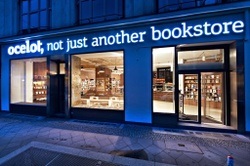
PHOTO: © (c) ocelot
Tschechien übersetzen
Di, 29. Sep 2026
19:30 - 23:00
In the organizer's words:
In 2026, the Czech Republic will be the guest of honor at the Frankfurt Book Fair, but who reads Czech works in the original? Without literary translators, there would be no world literature—in keeping with a long-standing Ocelot tradition, we therefore invite translators on International Translators’ Day to introduce us to the literary landscape of the guest country, to introduce us to the unique features of its language, and to help us better understand the challenges that arise when engaging with selected new releases, the authors, one’s native and foreign languages, and the expression of one’s own voice—because ultimately, all of this shapes our view of a country.
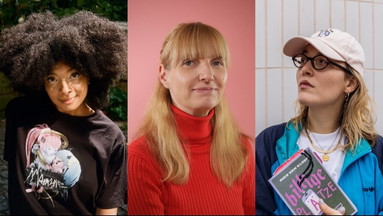
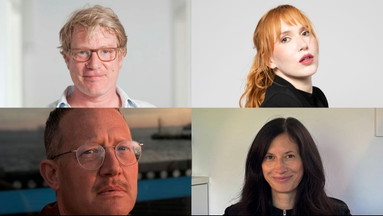
Eva Profousová was born in Prague and fled Czechoslovakia for Hamburg at the age of 20 with no prospect of returning. After studying Slavic studies and history, she soon began translating—into German, which was considered a no-go at the time. Since then, she has—having received numerous awards—made major authors from her country of origin, such as Václav Havel, Karel Čapek, Jáchym Topol, and Radka Denemarková, accessible to a German audience. In addition, she curates and hosts festivals, reading series, and literary events, and performs as a reader. At Ocelot, she will take us on a journey through her work on Radka Denemarková’s sweeping novel *Schokoladenblut* (Hoffmann und Campe) via a reading and discussion, exploring writing as an act of resistance in a world of capitalism, nationalism, and self-censorship.
Barbora Schnelle was born in Brno; she is a theater scholar and critic, cultural manager, and editor, a co-founder of Drama Panorama, and, above all, an expert in translating texts that often consist solely of dialogue: plays, surtitles, and comics. She translates both into Czech (e.g., plays by Elfriede Jelinek, Sivan Ben Yishai, or Werner Schwab) and into German (e.g., Roman Sikora, Anna Saavedra, or Tomáš Dianiška). What adaptations are necessary to make a text “speakable” in another language and have a “performative” effect? What are the specific challenges of translating for stage productions, and what about translating for young audiences? How do you find texts that absolutely should cross borders? She’ll discuss these questions and much more, drawing on the moving, award-winning graphic novel *Neither Boy Nor Girl* by Marita Kelbl and the play *Castle on the Loire* by Roman Sikora.
Claudia Hamm has been hosting the Hieronymus Day at the Ocelot for years. She is the author of essays, plays, and prose, and has been translating the works of Emmanuel Carrère for 16 years, as well as books by Yasmina Reza, Joseph Andras, Édouard Levé, and Mathias Énard, and has worked for many years as a director and dramaturg in theaters across the German-speaking world, France, and Italy.
An event organized by Weltlesebühne e.V. in collaboration with the Institute for Slavic and Hungarian Studies at Humboldt University in Berlin.
Price information:
*The discounted price applies to anyone for whom the regular price is a financial barrier (e.g., students, apprentices, or people with low incomes). We trust you to assess your own situation.
Location
Accessibility information
We don't have any accessibility information for this event.
You can find everything about accessibility at Rausgegangen here.