In the organizer's words:
"Don't be silent, don't be silent anymore.
- When one begins, many follow."
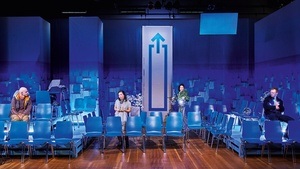
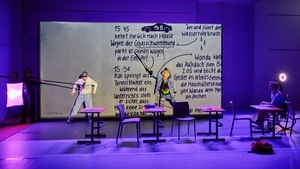
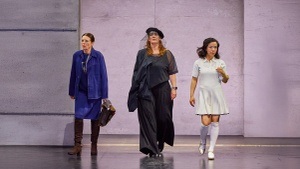
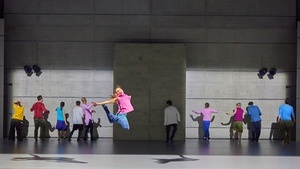
"White Rose" is the name of the courageous resistance group against the Nazi dictatorship that formed in Munich in June 1942 around the circle of friends of siblings Hans and Sophie Scholl. The members and supporters of the group appealed to the responsibility of each individual for freedom and justice out of humanistic motives. Exposed in February 1943, seven members of the group were sentenced to death and executed, including Hans and Sophie Scholl. The opera uses dramatic, visionary images to trace the central stages of their lives, such as memories of war experiences or Sophie's fear of her children being deported. This is contrasted by monologue passages in which the protagonists reflect on their own situation and the consequences of their actions.
Udo Zimmermann, who was born in Dresden in 1943 and died there in 2021, was one of the central musical personalities of the GDR and also one of the few whose works continued to be performed in both East and West Germany after the fall of the Berlin Wall. With the chamber opera Weiße Rose (White Rose), which was first performed in 1967 and then fundamentally revised and reworked together with Wolfgang Willaschek in 1984/85, Zimmermann created one of the most frequently performed works of contemporary music theater. Cleverly interwoven motifs and texts bring the inner conflicts, decisions and actions of the protagonists to life on stage. The arc of tension leads from hope and idealism to despair and fear of death.
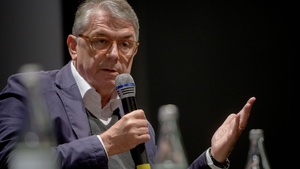
In cooperation with the Würzburg Cathedral School, the Mainfranken Theater is organizing a post-performance discussion following the performance on 22 June (performance starts at 3 pm). In addition to an exchange about the opera, the discussion will also focus on general issues of social interaction, civil courage and questions of injustice and conscience. Participants are
- Baritone Leo Hyunho Kim (took on the role of Hans Scholl in the play)
- Soprano Milena Arsovska (Sophie Scholl)
- Dagmar Wirth (from the "Grannies against the Right" initiative)
- Eva Greber (from the Würzburg Alliance for Democracy and Civil Courage, among others).
Location








Events near you
Activities near you
Popular event locations
The best event recommendations for the Rausgegangen App!
