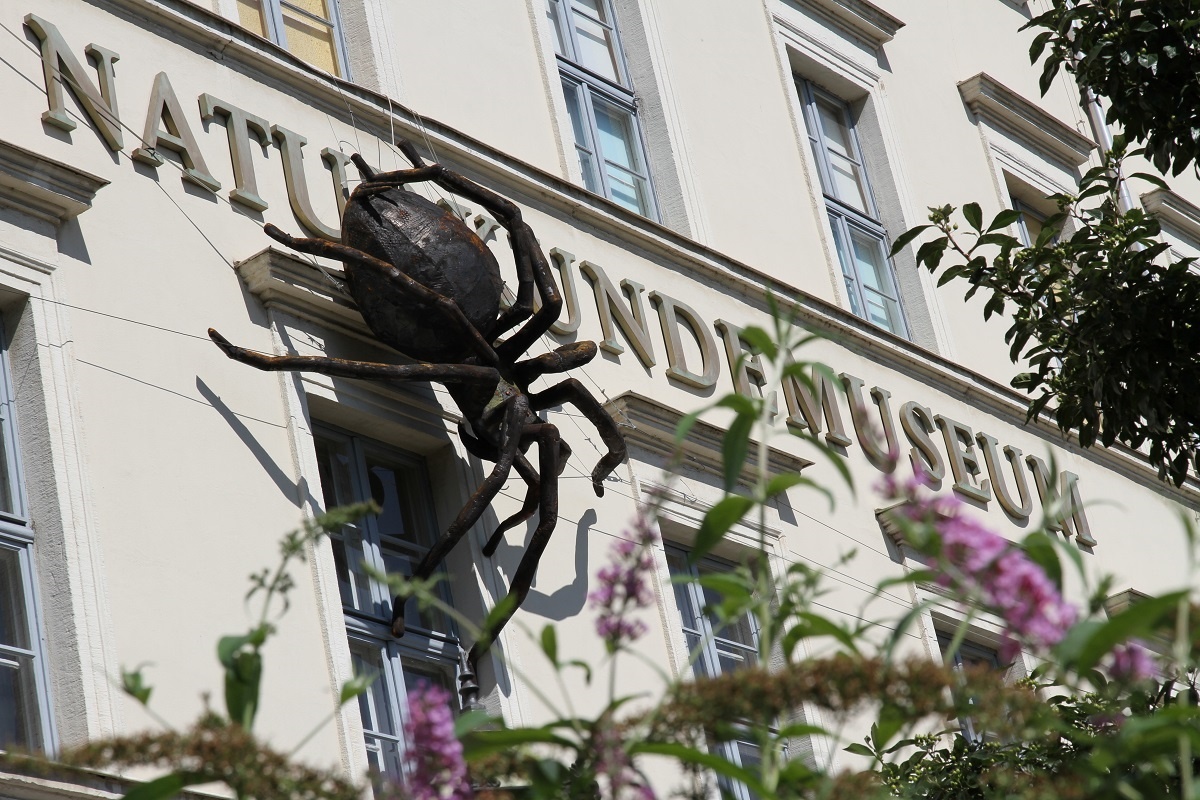
Naturkundemuseum Leipzig
In the location's words:
The Leipzig Natural History Museum is one of the most important institutions in Saxony, where the treasures of our local nature, flora and fauna, habitats, their geological foundations and the beginnings of the region's settlement history have been and are comprehensively documented. The collections, mostly meticulously compiled by citizens in time-consuming voluntary work and often left to the museum as donations or bequests, form the basis of the most extensive nature archive in north-west Saxony.
Extensive finds from the tertiary geological period in the former large-scale open-cast lignite mines around Leipzig offer the opportunity of a unique presentation of 50 million years of climate and landscape history. No other region in Europe has been so heavily perforated. In addition, there are 10,000 years of natural and cultural history of a region in which the interactions between the floodplain landscape with its rivers, forests and meadows and human settlement have led to a diverse and species-rich natural and cultural landscape, the evidence of which can be found as the most valuable cultural assets in the museum's collections. Many of the specimens in the vertebrate collections were created under the hands of Hermann ter Meer, probably the most famous revolutionary of modern taxidermy.
This content has been machine translated.Öffnungszeiten
Future events by Naturkundemuseum Leipzig

Get the Rausgegangen App!



Panometer Leipzig - 360…
Haus Böttchergäßchen - …

Deutsches Buch- und Sch…

Kunstkraftwerk Leipzig

Museum der bildenden Kü…
GRASSI Museum für Angew…

G2 Kunsthalle

Galerie für Zeitgenössi…

INSPIRATA – Zentrum für…

GRASSI Museum für Völke…

Museen im GRASSI
Musikinstrumentenmuseum…

Gipsabguss-Sammlung der…

Stadtbibliothek Leipzig

Verschiedene Orte in Le…
MÄDLER ART FORUM

Völkerschlachtdenkmal

Bach-Museum Leipzig
Altes Rathaus - Stadtge…
Kindermuseum - Stadtges…
Events near you
Activities near you
Popular event locations
The best event recommendations for the Rausgegangen App!

Gemeinsam Events erleben
Events werden noch schöner wenn wir sie teilen! Deshalb kannst du dich jetzt mit Friends und anderen Usern vernetzen um Events gemeinsam zu besuchen. Loslegen