Stadthalle Wien
In our words:
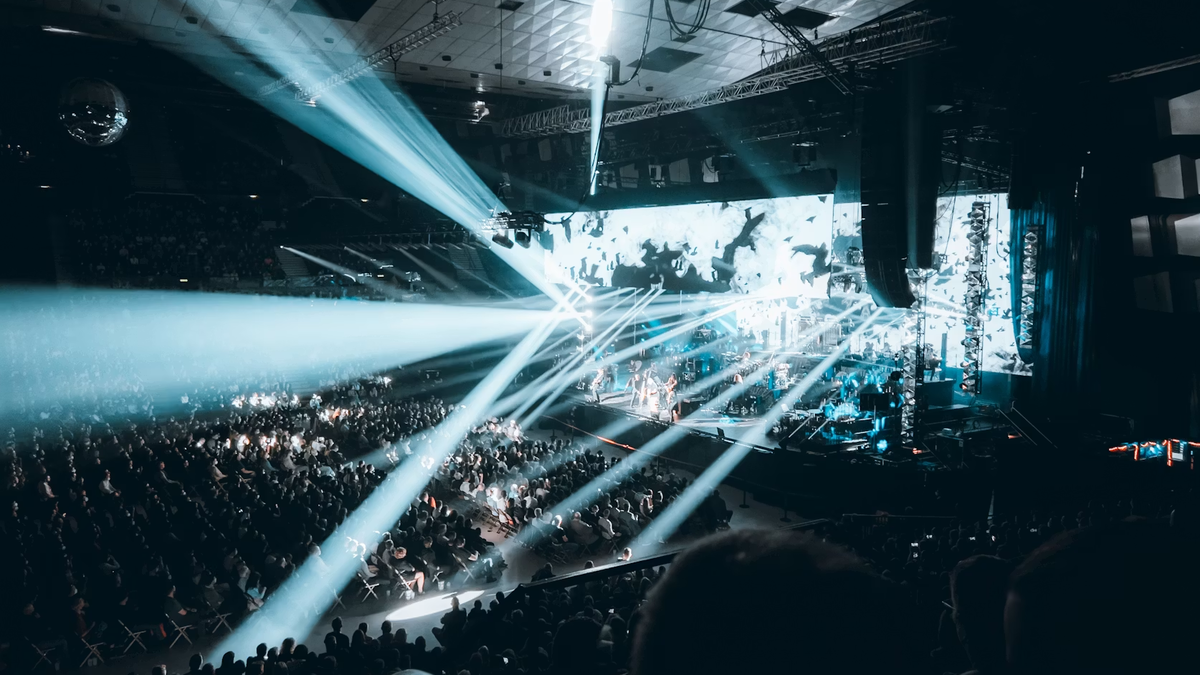
The Wiener Stadthalle isn’t just a hall—it’s the heartbeat of Vienna. Every year, hundreds of thousands of people experience their greatest moments under one roof: a concert that gets under your skin; a sporting event that sends the city into a frenzy; a show that stays with you forever. Since 1958, the Stadthalle has been connecting artists with their fans and athletes with their audiences, making Vienna what it is: a city where great things happen. Whether it’s a concert, a trade show, or a swimming pool, the Stadthalle is the place where memories are made.
In the location's words:
The Arena That Has Been Bringing People Together Since 1958
In Vienna’s 15th district, Rudolfsheim-Fünfhaus, lies an event venue that has shaped Austria like almost no other cultural center: the Wiener Stadthalle. Since its opening by Federal President Adolf Schärf on June 21, 1958, it has been not just a concert hall, but a multipurpose venue for memorable moments—music, sports, circus, trade shows, TV productions, and major international events—all under one roof.
In this single venue, concerts by Britney Spears and Lenny Kravitz are just as much at home as the Erste Bank Open (since 1974), the Eurovision Song Contest (2015 and 2026), the World Judo Championships, and the European Handball Championships. The Wiener Stadthalle is not just an event venue—it is the cultural backbone of Vienna and Austria’s largest event venue.
Over 300 events per year. Around 1 million visitors. An annual economic impact of approximately 70 million euros. The numbers speak for themselves: The event center brings people together, creates unforgettable memories, and defines what major events mean in Austria.
Architecture for the Ages
The heart of the Stadthalle beats beneath a roof measuring 100 m × 100 m—constructed of steel, lowered in the center, and following the slope of the stands at the sides. A masterpiece from a time when Vienna was reinventing itself after World War II.
This icon of Austrian postwar architecture was designed by Roland Rainer, the architect who won the competition in 1952 against international competition (including Alvar Aalto from Finland). The cornerstone was laid in October 1953; construction began in March 1954; and the topping-out ceremony took place in April 1956. When the first public tournament featuring six cycle ball teams took place on October 19, 1957, the Wiener Stadthalle was no longer a dream but a reality.
The sculptures by Wander Bertoni and Fritz Wotruba contribute to the artistic design. The VIP lounge features the tapestry “The World and Man” by Herbert Boeckl, created in 1958 for the World’s Fair in Brussels—a piece of contemporary history on the wall.
Six halls. One vision.
The Wiener Stadthalle is not just one hall—it is a system, a flexible spatial structure designed to meet every need:
Hall D – The Main Stage (16,152 seats)
Austria’s largest multipurpose hall. 98 m × 110 m, ridge height 26.6 m. This is where the Eurovision Song Contest took place in 2015 and 2026, where major concert acts perform, and where the Erste Bank Open is held. It features ground-level grandstands on the north and south sides, two upper tiers, and a variable stage size of up to 600 m².
Hall F – The Show Stage (2,036 seats)
Opened in 2006, designed by Dietrich Untertrifaller. A compact arena: rising like a theater, with an integrated catwalk, show stage, and state-of-the-art event technology. The stage for musicals, theater, galas, and musical performances.
Hall E – The Small Multipurpose Hall (1,482 seats)
Since 1994. 50 × 25 m, 4.5 m high. Perfect for exhibitions, trade shows, and social events.
Halls A, B, C
The smaller sports halls for training, conferences, and specialized events. Hall C is the ice rink (30 m × 60 m)—the venue for ice hockey and figure skating since 1958.
Municipal Indoor Swimming Pool (1974)
Three pools: the main pool (50 m × 25 m) with a diving tower (1, 3, 5, 7, 10 m), a children’s pool, and a training pool. Spectator stands for 800 people. Sauna, restaurant, and bowling alleys.
History That Lives On
What many people don’t know: The Wiener Stadthalle was also a film production company. In 1961, the City of Vienna founded the “Wiener Stadthalle Betriebs- und Produktionsgesellschaft” and financed about 25 film productions—ranging from the successful “Unsere tollen Tanten” (1961) to Westerns and “Schüsse im 3/4 Takt” (1965). Production manager Karl Spiehs reflected on this later: “The Stadthalle offered me incredible opportunities.” Although this cinematic era ended in 1966, it shows that the Stadthalle has always been experimental, always ready to try something new.
Directions & Practical Information
Location: Roland-Rainer-Platz 1, 1150 Vienna (Rudolfsheim-Fünfhaus)
Access: U6 Gumpendorfer Straße, tram lines 6 and 9 (Stadthalle)
Parking: Märzparkgarage (750 spaces under the Märzpark), Stadthallengarage (704 spaces), Lugner City
Dining: Restaurants and bars right on site
Frequently Asked Questions About the Wiener Stadthalle
1. Is the Wiener Stadthalle accessible to wheelchair users and people with limited mobility?
Yes. The Wiener Stadthalle is barrier-free and wheelchair-accessible. All halls, the Stadthallenbad, and the lobbies are accessible. There are designated parking spaces for people with disabilities. Detailed information on accessibility can be found on the website or by calling the service hotline. For specific inquiries regarding particular events, we recommend contacting the Stadthalle directly.
2. Can I visit individual museums or exhibitions at the Stadthalle without attending a major event?
The Wiener Stadthalle is primarily an event center, not a museum with permanent exhibitions. However, you can visit the halls during exhibitions, trade shows, and specialized tours. The Stadthallenbad is open to the public during regular hours. Information on current exhibitions and events can be found at stadthalle.com or by contacting the ticket hotline.
3. When will the next Eurovision Song Contest take place in Vienna?
The 2026 Eurovision Song Contest will take place from May 12 to 16, 2026, at the Wiener Stadthalle. The City of Vienna was selected as the host after the Stadthalle prevailed over the Olympiahalle in Innsbruck. This will be the second time Vienna has hosted the ESC—it was also held at the Stadthalle in 2015. Tickets and the latest information are available on the official ESC website and at stadthalle.com.
4. Are there guided tours of the Wiener Stadthalle, and can I learn more about its architecture?
Yes. The Vienna Stadthalle offers special tours and guided tours where visitors can learn about the history, architecture, and functionality of the various halls. Particularly popular are tours focusing on its history (from the Schmelzer Cemetery to the event center), the architecture by Roland Rainer, and its significance as postwar architecture worthy of UNESCO recognition. Information on available tours can be found at stadthalle.com or by phone.
5. What will happen to the Wiener Stadthalle after 2024—is it true that large-scale concerts will no longer take place there?
The Wiener Stadthalle is undergoing a gradual transition. Starting in 2024, no more major international concerts or sporting events will take place in the main hall, as technical renovations would be difficult due to historic preservation requirements and a lack of space. As a replacement, the Wien Holding Arena is being built on the site of the former Sankt Marx slaughterhouse (construction is scheduled to begin in 2021). In the future, the Wiener Stadthalle will be used primarily for recreational sports, exhibitions, and trade shows. Hall F will continue to be used for concerts, theater performances, and musicals.
This content has been machine translated.Opening hours
Montag: 10:00 - 18:00
Dienstag: 10:00 - 18:00
Mittwoch: 10:00 - 18:00
Donnerstag: 10:00 - 18:00
Freitag: 10:00 - 18:00