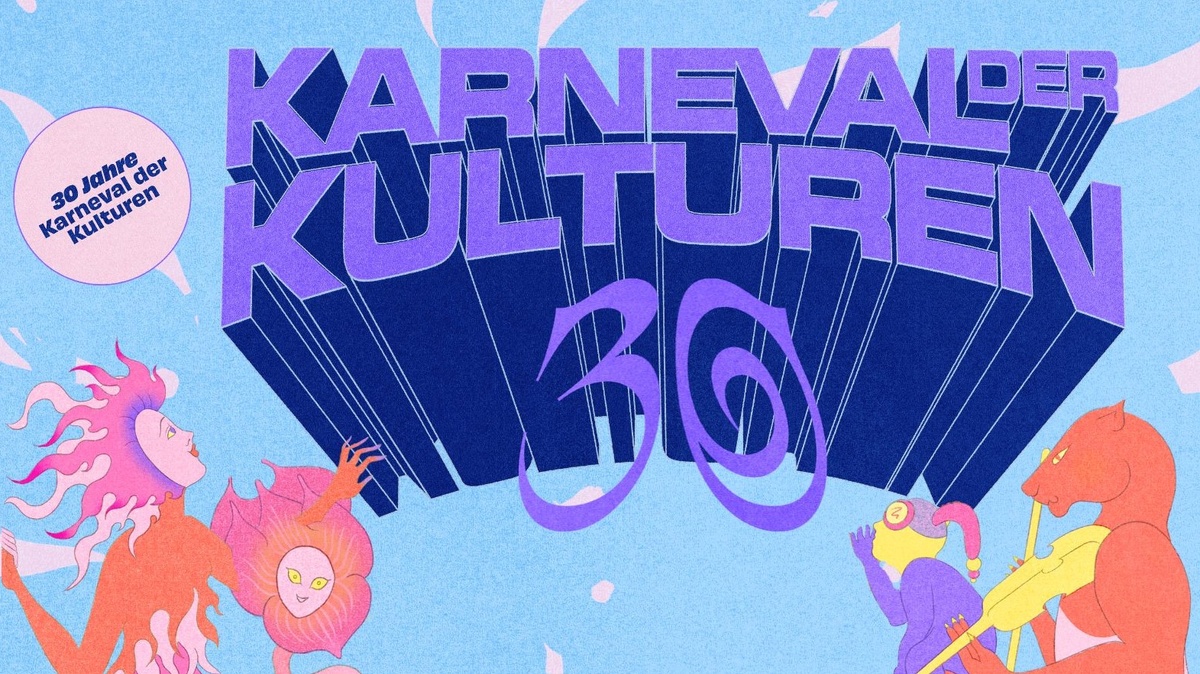
Karneval der Kulturen
In the page's words:
Background
The Carnival of Cultures is one of the largest cultural interventions in public spaces in Germany, which is clearly against discrimination and for a free, sustainable and peaceful society.
Since its inception in 1996, it has seen itself as a response to racist attacks and stands for an open and diverse society. As a living post-migrant tradition, it creates spaces for encounters, creative expression and solidarity. Berlin's cultural diversity will be visible and celebrated at this year's four-day street festival in Kreuzberg and the large parade on Whitsunday, which will pass through Friedrichshain this year. Around 5,000 participants turn the public space into a stage and showcase the richness of the city's society. The carnival offers a platform for Berlin communities that want to showcase their themes and cultural roots or take them into a new era. People of all ages and from all neighborhoods can make their concerns visible here. The Carnival of Cultures is part of a year-round network of diverse cultural practitioners and shows that cultural diversity is not a state of emergency, but part of everyday life in Berlin.
The anniversary year
However, the anniversary year faces particular challenges: There is still a lack of money to fully finance the street festival and parade. Everyone can support the Carnival of Cultures through the diverse events and parties.
In times of increasing social polarization, the Carnival of Cultures consciously sees itself as a Brave Space: a courageous public space in which people become visible, take a stand and stand up for their issues. Unlike a "safe space", the carnival is not a closed or homogeneous space. It takes place in the middle of the city with different communities, perspectives and lifestyles. A "Brave Space" therefore means the willingness to shape, live and also endure diversity, to negotiate different positions respectfully and to actively live democracy in the public space.
Street parade: Frankfurter Allee and Karl-Marx-Allee
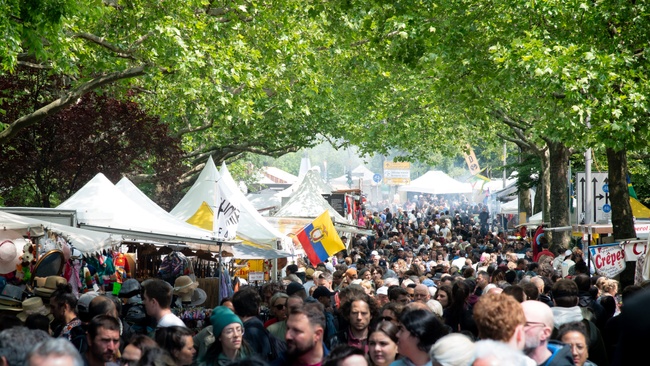
For the first time, the street parade will move through Friedrichshain - through Frankfurter Allee and Karl-Marx-Allee. 67 committed groups will bring their artistic expressions and socially relevant topics to the streets. The motives and impulses of the protagonists are as diverse as our city itself. In addition to the colorful and vibrant performances of the groups, numerous stalls along the route invite you to enjoy, discover and exchange ideas.
Street festival: Blücherplatz, Kreuzberg
The street festival is also a place for encounters, expression and living community. Over Whitsun, from May 22 to 25, 2026, the Carnival of Cultures is once again inviting visitors to a four-day street festival around Blücherplatz. In addition to the three established stages Sound Avenue, Klang Plaza and Neue Pumpe, the programme will be supplemented by a further stage and 10 music corners, which will transform the street festival into a decentralized sound space. The result is a diverse, four-day program curated with musicians, artists, performers and dancers from a wide variety of contexts. Berlin bands will find a big stage and enthusiastic audiences at the four-day street festival. Musically, it's all about the world: from Anatolian jazz and Afrobeat to Japanese fusion rock, mestizo sounds and Balkan beats, the street festival combines music, dance, craftsmanship and urban culture to create a special event. From unusual designs, craftsmanship and truly unique pieces to culinary delights, imaginative design, juggling or simply taking a deep breath. The festival is a colorful oasis for all generations. Right in the heart of Kreuzberg, the street festival is a living testimony to how traditions can be preserved and further developed in an urban context. Diversity is the driving force behind creativity and community here.
Anniversary exhibition at Künstlerhaus Bethanien - Studio 1 Even before the 2026/27 budget decision, it was foreseeable that additional anniversary formats could not be financed from the carnival's regular budget. For this reason, additional funding was specifically applied for. Thanks to the jury's decision on the open-discipline funding of the state of Berlin, the exhibition "Vom Sehen und Gesehenwerden", curated by Juana Awad, can also be realized. From 13 to 26 May 2026, the group exhibition at Künstlerhaus Bethanien will bring together 14 artistic positions from three generations of diasporic and post-migrant artists in a dialog about gaze regimes, self-staging and strategies of (in)visibility. The exhibition foregrounds the artistic practices of some of those who navigate the common field of migration, resistance and critical practice in Berlin both inside and outside of the carnival.
This content has been machine translated.You might enjoy this as well?
Future events by Karneval der Kulturen
Get the Rausgegangen App!


You might enjoy this as well?

MIT DIR Festival
GASWERK MUSIC DAYS - Ra…

Doxumentale
PREVYOU Kurzfilmfestival
CTM Festival
Rocktreff
Pop-Kultur Festival

ZEBRA Poetry Film Festi…
Jazzwoche Berlin #6
ZEIT FÜR ZIRKUS / ZEIT …
Monat der zeitgenössisc…
Leisure & Pleasure - pr…

Sommer Berlinale
Fête de la Musique Berl…
Klangwerkstatt Berlin

Performing Arts Season
Kultursommerfestival Be…
German Irish Vampire-Fe…
Musik & Stille
Fantasy Filmfest - präs…
Events near you
Activities near you
Popular event locations
The best event recommendations for the Rausgegangen App!
