

PHOTO: © Raphael Renter via Unsplash
CSD Berlin 2026: Queer History, Political Issues Today, and Events You Shouldn't Miss
The Beginnings: Stonewall as an Uprising by BIPoC Queer People
Christopher Street Day commemorates the Stonewall Uprising of June 28, 1969, in New York. It was not a peaceful protest. It was an uprising.
And it wasn't a revolt led by white gay men. It was Black and Latinx trans women who fought on the front lines. Marsha P. Johnson, Sylvia Rivera, and countless other BIPoC queers—whose names we often don't know—held the line when the police arrived.
The Stonewall Inn, a gay bar, was located on Christopher Street, in a climate of police violence and oppression. Gay, lesbian, trans, and non-binary people were systematically persecuted.
But on the night of June 28, the police came—as they so often do—to carry out raids. It was routine: arrests, humiliation, violence. But this time was different. This time, people fought back. They threw rocks, bottles, and trash. They shouted back. It wasn’t an organized protest, but an uprising born of desperation and anger. For three days, queer people occupied the street. They demanded what should be a given: the right to exist without being criminalized.
Stonewall was a turning point
A year later, on June 27, 1970, gay and lesbian activists in New York organized the first Gay Pride Parade. It was small but radical. People carrying signs marched through the streets, celebrating and making demands at the same time. It was a political act.
This idea spread rapidly around the world. In Germany, in Europe, and in Berlin, people began to celebrate these days. Christopher Street Day wasn’t just a party. It was a day to commemorate struggles, a day to raise awareness, and an act of resistance.
Berlin and the Queer Revolution After 1989
Berlin is a very special place when it comes to LGBTQIA+ history. The city wasn’t always the queer paradise it is today. Under the GDR, there was formally less criminalization than in the West, but also less freedom. Gay and lesbian people were everywhere, but they were hidden, silenced, and controlled.
West Berlin was different. It was here that the first gay liberation movements emerged in the ’70s and ’80s. There were scenes, bars, and places where queer people could be themselves. But Berlin was a divided city. The Wall separated not only East and West, but also the worlds of queer people in the East and West.
In 1989, the Wall fell. Berlin became a city that had to reinvent itself. And in the process of this reinvention, unique spaces for queer culture emerged. After the Wall fell, people from all over the world flocked to Berlin. Many of them were queer, seeking freedom, seeking refuge, seeking community.
In the ’90s, Berlin became a global hub of queer culture. It wasn’t just about partying, but also activism, artistic creation, and theoretical work. People launched projects, clubs, and collectives. They created spaces where queerness was not only tolerated but celebrated. Schönefeld, Kreuzberg, and Friedrichshain became places where queer scenes developed.
The CSD in Berlin became one of the largest and most political in Europe. While other cities organized their Pride events in a more conservative manner, Berlin remained radical. It was a place where various struggles converged.
The 2000s and 2010s: Visibility Without Security
Over the years, Berlin Pride grew. Millions of people took to the streets. For one weekend, the city became Europe’s biggest queer celebration. But success also brought new questions. With every new “normal,” there was also the danger of depoliticization. Berlin Pride became commercialized. Large companies sponsored stages and beer, as if queerness were a marketing tool.
At the same time, it became clear that visibility alone was not enough. Trans people, BIPoC communities, and queer people of color were not safe. They still experience violence, discrimination, and persecution. To this day, the big Pride party hides these realities.
Berlin 2026: Pride as a Continuum of Struggles
CSD Berlin 2026 is the result of this history. It is not only a commemoration of Stonewall in 1969, but also a recognition of all the struggles that took place in between. It honors the activists of the 1970s and 1980s, the queer scene that reinvented Berlin after 1989, the major Pride parades of the 2000s, and the queer-feminist struggles of the 2010s.
At the same time, today’s CSD Berlin is also a reflection of the current political climate. Anti-queer sentiment is not a thing of the past. Trans people are under real pressure. Queer people of color are not safe. The idea that there are only two genders is gaining traction again. In this situation, Pride is not optional. It is a necessity.
Internationalist Queer Pride
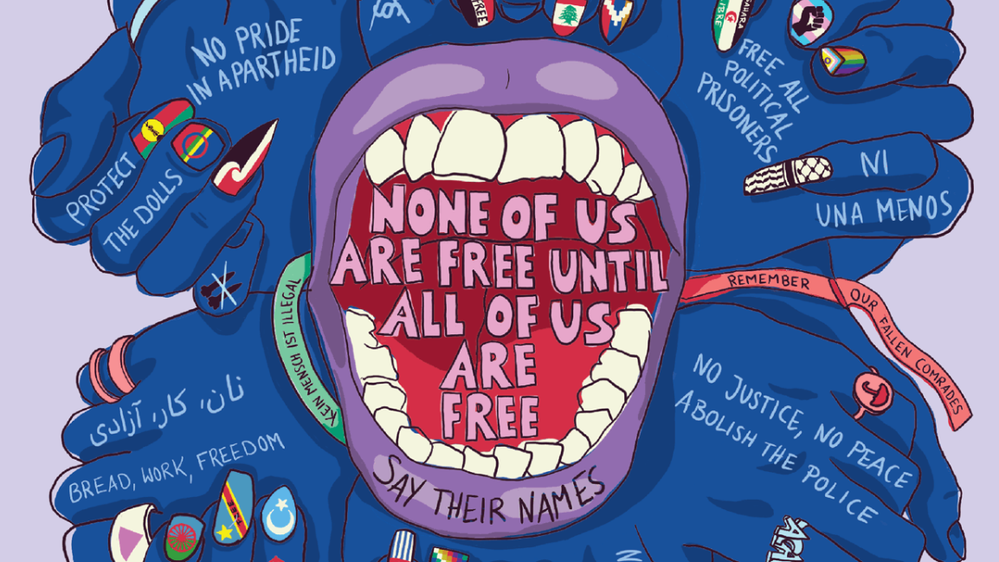
© Internationalist Queer Pride
Sa, 25.07.2026 15:00
None
All infos for the event Internationalist Queer PrideThe city of Berlin is shaping this CSD.
SMUDGE Berlin - Pride Opening Event & Party
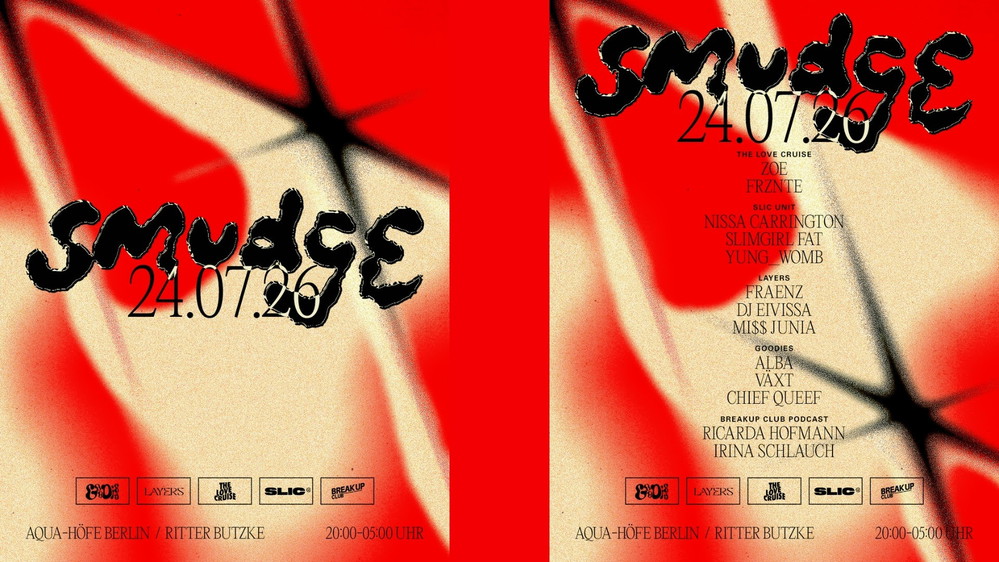
© intern Team Smudge
None
All infos for the event SMUDGE Berlin - Pride Opening Event & PartyHouse of Pride | Official Berlin Pride Main Party - 5th Anniversary
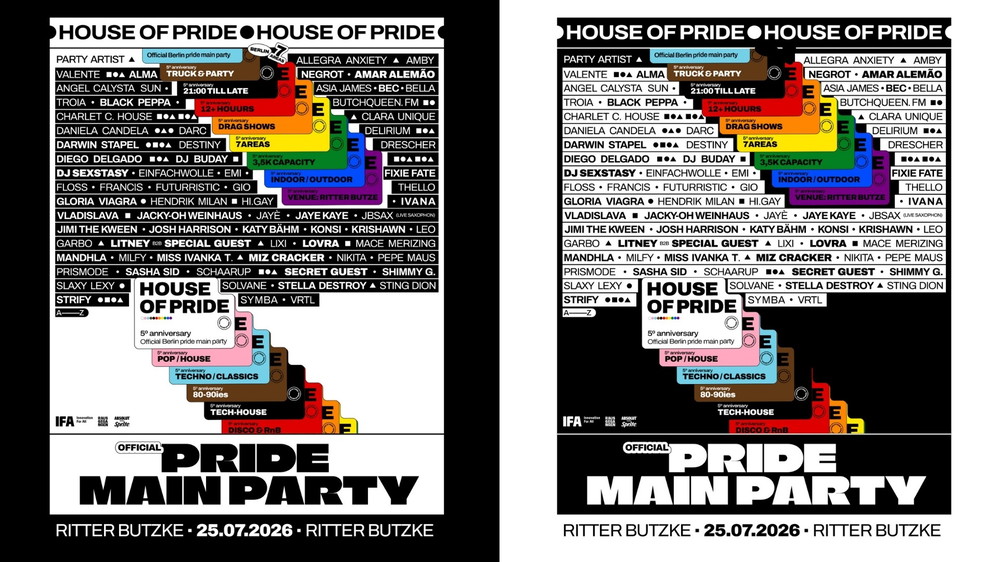
© RB
None
All infos for the event House of Pride | Official Berlin Pride Main Party - 5th AnniversaryOut of the Closet Kiki Ball & Daytime Open Air
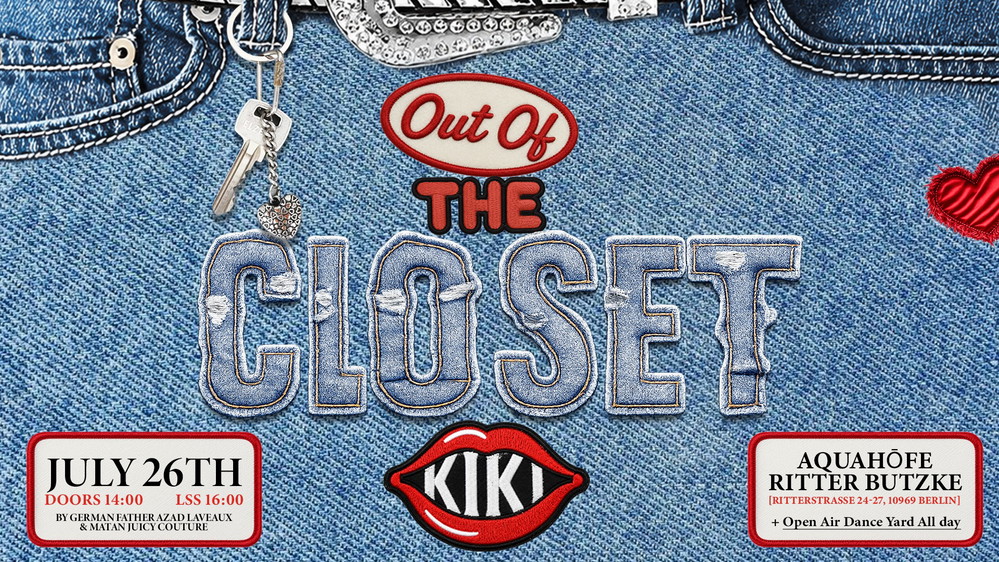
© intern
None
All infos for the event Out of the Closet Kiki Ball & Daytime Open Air