PHOTO: © Johannes Raimann
Kunsthalle unterwegs: Ecologies in Motion
Sa, 23. Mai 2026, 11:00 -
So, 30. Aug 2026, 17:00
Künstlerverein Malkasten
Düsseldorf
In the organizer's words:
Stefanie Bühler / Arpad Dobriban / Klaus Fritze / Kanade Hamawaki / Aslı Hatipoğlu / Temitayo Ogunbiyi / Katie Paterson
Ecologies in Motion is a cooperation between the artists' association Malkasten and the Kunsthalle Düsseldorf, which is being realized as part of the Kunsthalle unterwegs project series.
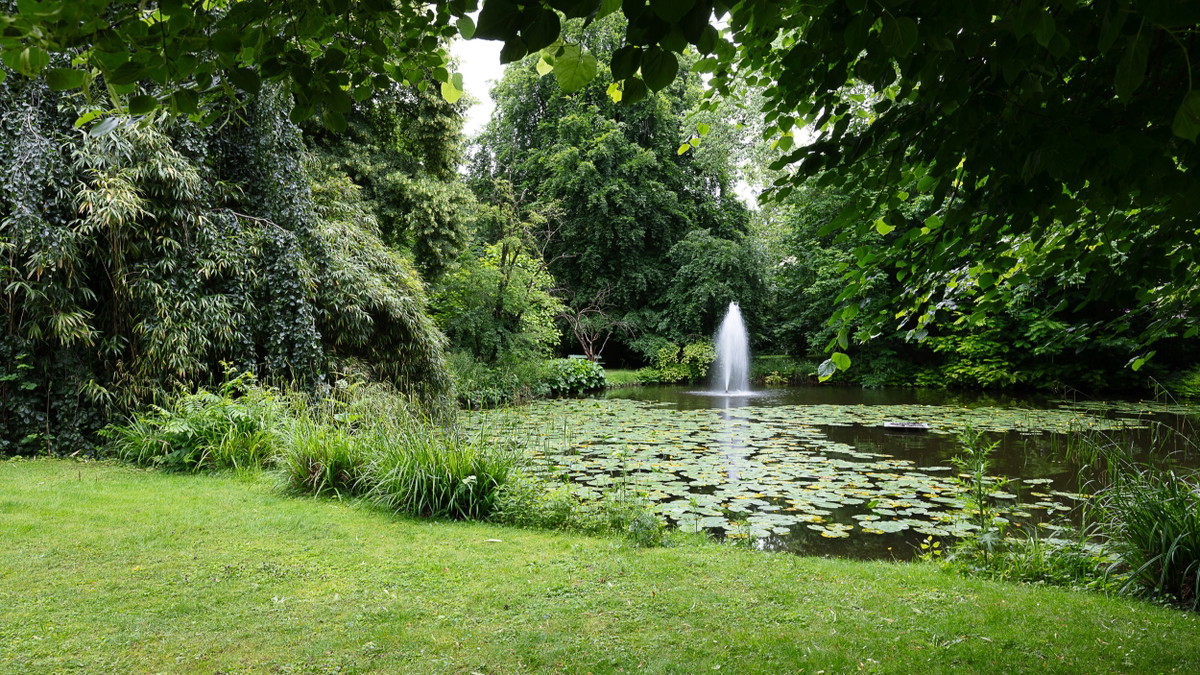
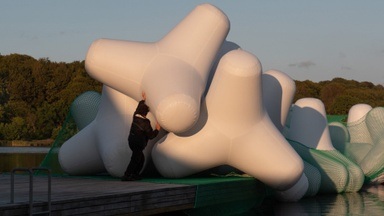
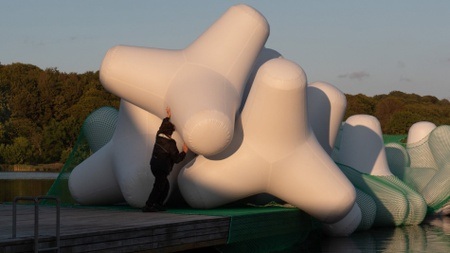
The two-and-a-half-hectare Malkasten Park, which was laid out in the center of Düsseldorf in the mid-18th century, is at the heart of the cooperation project. The park not only functions as a backdrop, but is also made visible as an active player in artistic and social processes - as a place of encounter, remembrance and transformation. Sculptures, performances and interventions animate the park in a variety of ways and open it up as a space for contemporary art, biodiversity in urban space and encounters of various kinds.
Ecologies in Motion takes up the park as a social, ecological and aesthetic space. As a social space, it offers opportunities for encounters, exchange and collective experience, while as an ecological space it opens up new perspectives on biodiversity in an urban context. Raising awareness of the mature trees, historical structures and green spaces of the Malkastenpark is an integral part of the project and visitors are invited to reflect on a sustainable relationship with the designed environment. As an aesthetic space, the park contributes its own history: From the Baroque ideal with its geometric forms and visual axes to the English landscape garden and today's appearance, it tells of a transformation of aesthetic ideals. The artistic layout of the garden now enters into a dialog with current artistic positions. The park thus becomes not only an exhibition venue, but also a medium for artistic reflection.
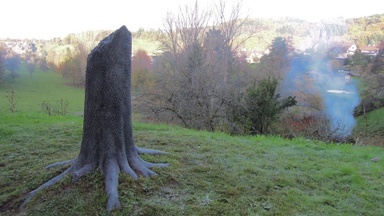
The works of Stefanie Bühler and Katie Paterson deal with ecologies. While Bühler's sculpture Eyewitness (2013) is based on the long-extinct carboniferous lepidodendron tree, which was widespread more than 300 million years ago, Paterson's intervention To Burn, Forest, Fire uses scents to explore the first and last forest in the age of the climate crisis. The stimulation of the senses through specially made incense sticks creates an intimate experience that reminds participants of the man-made extinction of species. To Burn, Forest, Fire will be activated on five dates over the course of the exhibition. Klaus Fritze will deal directly with ecological conditions on site. With Parklabor Tilia 2.0, he stages an experimental set-up in which algae are cultivated and dioramas provide insights into the cryptogamic world. In her work Zukunftsarchäologische Anstalt 2026/51.229928, 6.788207, Kanade Hamawaki also deals with the Malkastenpark and examines it as the result of around 400 years of social, aesthetic and ecological use, change and maintenance. Temitayo Ogunbiyi's installation You will forge paths beyond your grandmother's imaginings (II) (2025) focuses on play. Ogunbiyi explores the possibilities of play and at the same time questions our understanding of it by linking it to historical and contemporary political experiences of space, tradition and nature. Aslı Hatipoğlu also deals with social interaction. She uses food as a medium and has produced two works especially for the exhibition: The ginkgo tree and Tilia euchlora form the basis for fermented biofilms that represent a living imprint of the trees. In addition, on August 23, she will stage a culinary walk in which she will combine real and fictitious stories with the history of the plants in the park with a great deal of humor and in-depth research, while guests can sample carefully prepared canapés. Food as the oldest cultural technique is also at the heart of Arpad Dobriban's artistic work. He serves the public a multi-course menu of dishes that he prepares and cooks himself, often using ingredients he has produced himself. For the exhibition, he conceived Fire Water Earth Air. Transformation through the elements - A sequence of dishes in four stations with lectures by Arpad Dobriban. The event will take place on July 5 in the Malkastenpark.
Malkastenpark
Jacobistrasse 6A
40211 Düsseldorf
Opening hours: Daily, 11 a.m. - 5 p.m.
Admission: 2 Euro
Location

Location | Museum
Organizer | Event Series
You might enjoy this as well?






Noch mehr Events dieser Location-Page