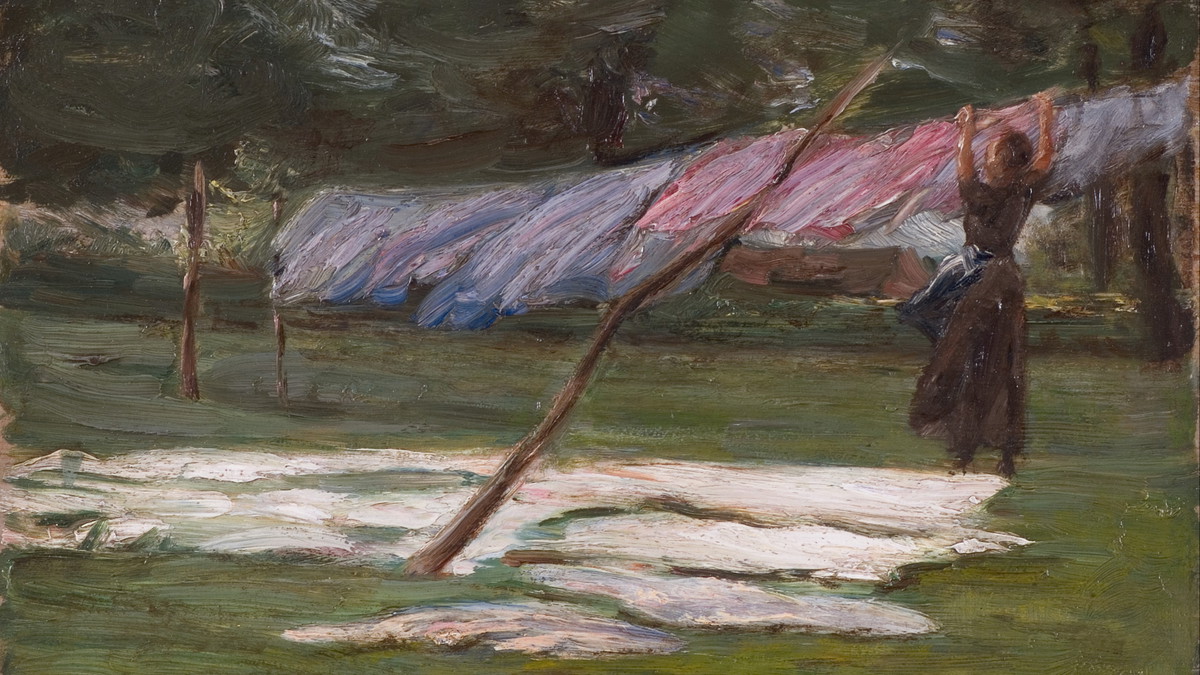
PHOTO: © Max Liebermann, Wäschetrocknen – Die Bleiche, 1890, Öl auf Holz, Museum Kunst der Westküste, Alkersum / Föhr, Dauerleihgabe aus Privatbesitz
Kuratorinnenfürung: Vier Wände voller Kunst

In the organizer's words:
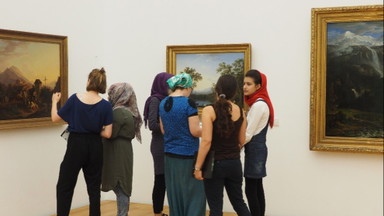
Curator-led tour of the exhibition
Admission: €12 / €6, no registration required
What’s it about?
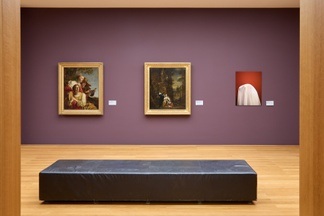
“Four Walls Full of Art” presents paintings, sculptures, and works on paper from the private collections of eleven Jewish families from Leipzig: Erna and Wilhelm Breslauer, Antonie (Toni) and Hermann Halberstam, Franziska and Max Heilpern, Margarete and Max Hermann Heine, Martha and Henri Hinrichsen, Clara (Cläre) and Gustav Kirstein, Moritz Kraemer, Karl Lilienfeld, Marie and Friedrich Nachod, Laura (Lore) and Carl Sonntag, and the brothers Moritz and Julius Ury. The families’ biographies are closely intertwined with the history of the MdbK.
At the beginning of the 20th century, Leipzig was an economically and culturally thriving metropolis, and Jewish families played a vital role in the city’s cultural life—until they were all but forgotten due to the atrocities and crimes of National Socialism. For over two years, the MdbK has been conducting intensive research into these families and their forgotten contributions, and is now, for the first time, honoring the outstanding contribution of Jewish families to the visual arts in Leipzig with an exhibition.
With the founding of the Jewish Religious Community in 1847, Leipzig’s Jewish population grew steadily until it numbered more than 13,000 people in 1925. This made Leipzig home to the sixth-largest Jewish community in Germany. A strong culture of collecting led to extensive and high-quality private collections, and through generous patronage, Jewish families supported the city’s artists and museums. When the National Socialists came to power in 1933, members of Jewish families—as well as those categorized as Jewish under anti-Semitic laws—were stripped of their rights, persecuted, robbed, expelled, and murdered. The exhibition aims to raise awareness of this immense and irreversible loss that the National Socialist, far-right radicalization of politics inflicted on Leipzig’s cultural life.
The collections of the eleven families include works of art from French and German Impressionism, Classical Modernism, and by other outstanding representatives of 19th- and 20th-century art. Stylistically, the collections thus reflect the spectrum of bourgeois culture. At the same time, the collectors supported artists and maintained friendly—and in some cases, familial—relationships with them and among themselves. Together, they were actively involved in cultural associations and clubs and formed a closely knit community of shared interests.
The exhibition explores the themes of art reception, the art market, and art patronage through the lens of individual biographies, bringing the multifaceted interconnections to life. Historical photographs, publications, and archival materials complement the artworks by telling the stories of the families’ lives and their members.
The exhibition is sponsored by the Cultural Foundation of the Free State of Saxony, the Friede Springer Foundation, the Hertie Foundation, and the Saxon State Office for Museums. In cooperation with “Tacheles—Year of Jewish Culture in Saxony 2026.”
You can find the program for educational institutionshere.
Location
Accessibility information
You can find everything about accessibility at Rausgegangen here.
Weitere Termine von Kuratorinnenfürung: Vier Wände voller Kunst
04.
Oktober
11:00
Leipzig
Museum der bildenden Künste Leipzig
6,00 to 12,00 €
25.
Oktober
11:00
Leipzig
Museum der bildenden Künste Leipzig
6,00 to 12,00 €
08.
November
11:00
Leipzig
Museum der bildenden Künste Leipzig
6,00 to 12,00 €
You might enjoy this as well?






Noch mehr Events dieser Location-Page