PHOTO: © Judith Buss
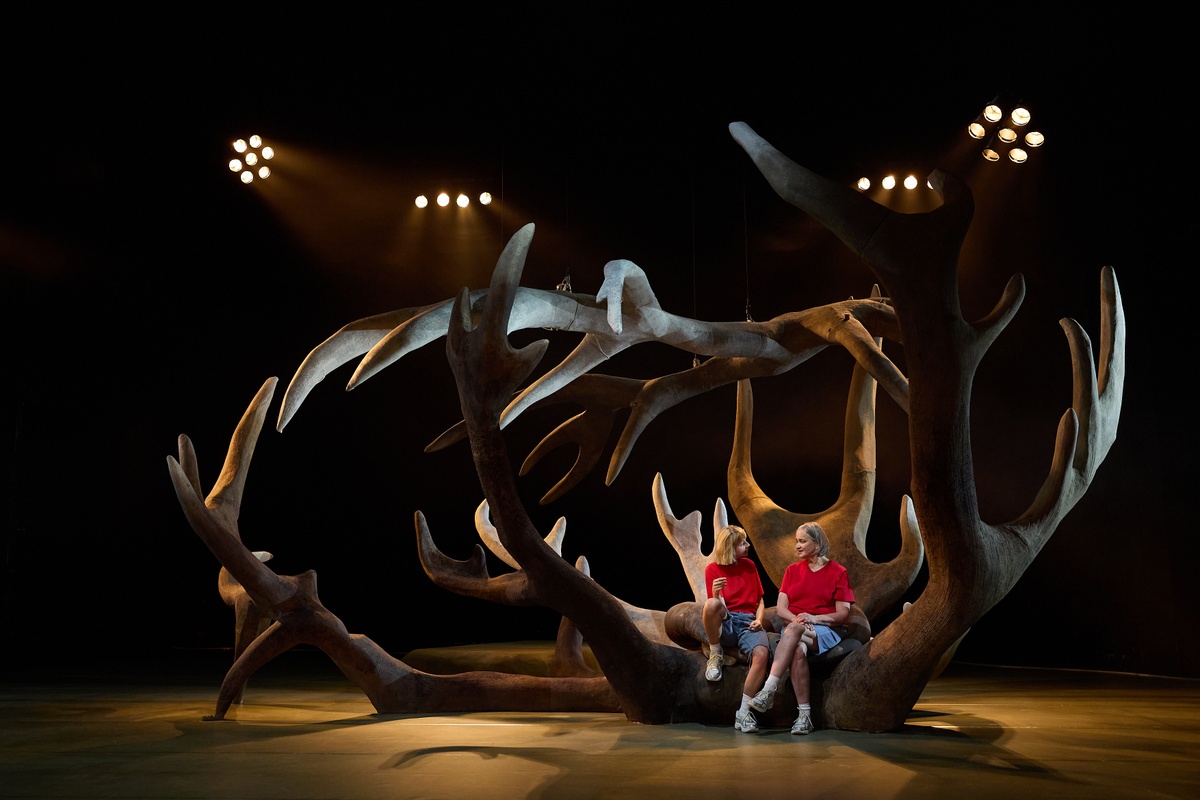
Mein kleines Prachttier
In the organizer's words:
In the Name of Love
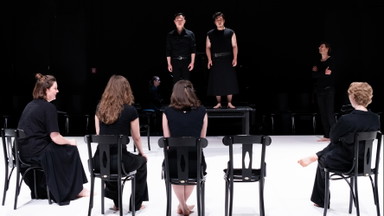
How can shame switch sides? Following “Fräulein Else,” Leonie Böhm continues her work toward establishing a dialogue and a different kind of coexistence beyond patriarchal structures of violence. The starting point is Lucas Rijneveld’s novel, in which Kurt, a veterinarian, writes a retrospective, unsparing, and self-reflective letter to a girl with whom he had been in an abusive relationship years earlier. This story treads the boundaries of what can be said. Kurt, then 49 years old, perceives it as love; she is on the cusp of adulthood. The text is a highly ambivalent introspection into a claustrophobic world, while simultaneously providing a space for the longing for words in a world of speechlessness and silence.
The imagined perspective of a man who mercilessly confronts his own violence becomes the starting point for a playful exploration by two women: They put themselves in the perpetrator’s shoes, attempting to understand the unimaginable and, in doing so, to free themselves from it. At the same time, the aim is always to make violence discussable and visible in the public sphere. The production explores the questions of where violence arises in a completely unequal and secretive relationship, and how we can help shape the discourse on violence against women’s bodies and take responsibility for one another.
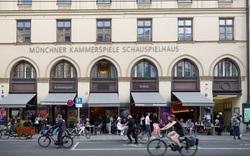
Director Leonie Böhm, known for her radical deconstruction of classic works, returns to the Münchner Kammerspiele, this time taking a contemporary text as her starting point. In her work, she focuses on creating an intimate space on stage with her performers to experiment with different forms of coexistence—radically open and vulnerable.
“For me, what’s spectacular about ‘Mein kleines Prachttier’ is that an author imagines a perpetrator’s perspective, which achieves something that helps transform the discourse and reflection on the themes addressed in the play. This perpetrator’s perspective reveals itself to the utmost, explains itself, puts itself up for scrutiny, attempts to articulate itself, attempts to recognize itself, and attempts to make itself vulnerable. Placing oneself up for scrutiny, dragging oneself into the spotlight with all one’s thoughts, feelings, and actions—that is the political act attempted in this book, which is, on the one hand, fictional and, on the other, genuinely changes the way I think.”
– Leonie Böhm
Location
Weitere Termine von Mein kleines Prachttier
You might enjoy this as well?











Noch mehr Events dieser Location-Page