Oldenburg
In the organizer's words:
Poetry by Ranieri de Calzabigi
In Italian with German surtitles
The Orpheus myth, in which the singer Orpheus descends into the underworld after the death of his beloved wife Eurydice in order to bring her back to the realm of the living, is a cornerstone of opera history. The world premiere of Monteverdi's "L' Orfeo" in Mantua in 1607 is considered the birth of opera. 155 years later, Christoph Willibald Gluck created another Orpheus setting that was to have a decisive influence on the history of the genre and paved the way for Mozart's operatic work.
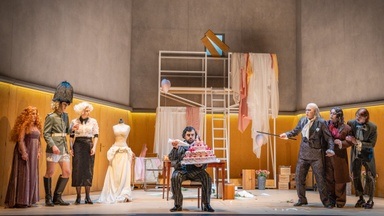
Gluck's "Orfeo ed Euridice" begins with Orfeo's mourning for the deceased Euridice. Cupid allows him to descend into the underworld and bring her back, on one condition: not to look at her on his way back to life. But Euridice despairs at his silence and doubts his love. Orfeo finally looks at her and loses her a second time. It is only through Cupid's intervention that the couple are reunited at the end.
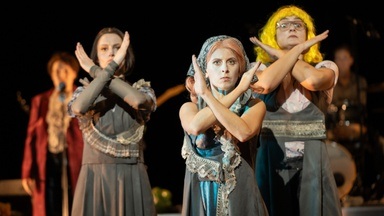
Director Aileen Schneider is less interested in the myth of the heroic deed of love than in the existential experience of loss, parting and grief. What does it really mean to let a loved one go? Isn't letting go perhaps the greater proof of love than desperately holding on? This also raises the question of the power of memory: how alive do memories keep the dead alive and how painful can they be? Cupid appears not only as the god of love, but also as an ambivalent force in the grieving process, mediating between consolation, hope and illusion.
Location

Weitere Termine von Orfeo ed Euridice
23.
Januar
19:30
Oldenburg
Oldenburgisches Staatstheater
from 20,00 €
30.
Januar
19:30
Oldenburg
Oldenburgisches Staatstheater
from 20,00 €
07.
März
18:00
Oldenburg
Oldenburgisches Staatstheater
from 20,00 €
You might enjoy this as well?













Noch mehr Events dieser Location-Page