Dieses Event ist vorbei. Hier geht’s zu
coolen aktuellen Events.
Event ist beendet

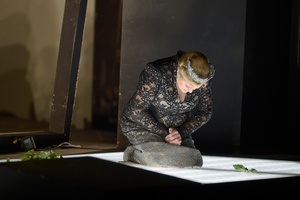
PHOTO:
© Foto © 2012, Leo Seidel
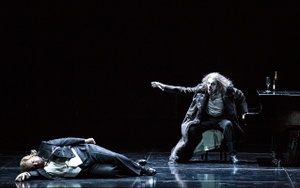
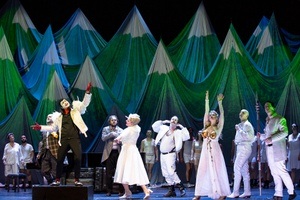
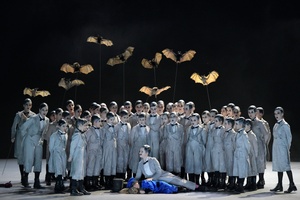
Tannhäuser und der Sängerkrieg auf Wartburg

In the organizer's words:
Wagner's opera about the Minnesinger torn between earthly and heavenly love is one of the works that has shaped the artistic identity of the house over decades - not least because of the famous Pilgrims' Chorus, which is the showpiece of our choir. In Kirsten Harms' colorful production, however, which evokes the imagery of the Middle Ages, the members of the chorus appear effectively not only as penitents but also as a magnificently decked-out court company ... Conductor: Pietari Inkinen; Director: Kirsten Harms; With Tobias Kehrer, Stephen Gould, Samuel Hasselhorn, Elisabeth Teige and others.
Tannhäuser longs to return to his earthly life from the realm of Venus. Only with the call of the Virgin Mary does he succeed in escaping the goddess. Hermann of Thuringia and his chivalrous hunting party welcome the long-lost man. The prospect of meeting his beloved Elisabeth moves him to return home. In a singing contest at Wartburg Castle, the essence of love is to be explored. The invited singers sing of the purity of feeling, but Tannhäuser praises the passion of Venus. The open confession of lust brings society into turmoil; they want to take action against Tannhäuser with weapons, but Elisabeth, although injured herself, protects his life. The Landgrave imposes a penitential journey to Rome on Tannhäuser. The pilgrims, however, return without Tannhäuser; he alone has not obtained papal forgiveness. He is threatened with eternal damnation, which he hopes to escape by returning to Venus. The invocation of Elisabeth's name brings him back to his senses - in the face of her death his torn soul now also finds redemption.
The theater as a place of dreams: based on the idea that Venus and Elisabeth merely represent two possibilities that a person is capable of uniting, Wagner's opera is the starting point for a stage play with the facets and possibilities in interpersonal interaction. Not only the medieval moral code, to which the personnel of the piece is ostensibly subjected, is one of the determining levels, but also the changes of the point of view, which are possible through the opposing dispositional expressions in a person. It is no longer the one who is torn to and fro who is the focus of attention, but much more strongly than is generally the case the one who is torn to and fro: Venus / Elisabeth. TANNHÄUSER from the point of view of the one woman who is much more than merely whore or saint. More than this "either-or", we are interested in tracing the "art of love" in this work.
"Since Louis the Mild, Landgrave of Thuringia, had died on a crusade in the Orient, he left no children, and the land fell to his brother Hermann. In his time, minnesong flourished in the German lands and was practiced and loved by princes and nobles, and Prince Hermann gathered many singers to his brilliant court at Wartburg Castle. For some time after him, there lived a minnesinger in Franconia who, like most of his fellow singers, led a wandering life. As he passed by the Hörseelenberg, he was stopped by the apparition of a miraculous female image, which was none other than Frau Venus herself, and beckoned him to follow her into the mountain, and although the faithful Eckart warned him, the knight was unable to resist, and went in, and let Frau Venus ensnare him, and stayed in the mountain for a whole year. Many old songs sing and say how remorse now came over Tannhäuser, that he thought about himself and went into himself, and asked to come out of the mountain again. When he said this, Frau Venus reminded him of the oath he had sworn to her, but Tannhäuser denied it to her beautiful face. She then offered to give him another playmate instead of her, but he said that if he did so, he would have to burn forever in the fires of hell because of such polygamy. Then Mrs. Venus laughed brightly and asked him what he was talking about the embers of hell. Whether he had ever felt this with her? Whether her red mouth did not laugh kindly at him at all hours? The argument went on like this for a while, until Tannhäuser, in his ingratitude for all the love and good things that Frau Venus had done for him, called her a she-devil. At last, Venus took offense and threatened to make him pay for it. Then Tannhäuser cried out to the Virgin Mary to help him get rid of the woman, and then Frau Venus spoke with pride: "Now he can go, he may only take a leave of absence from the old man - he will still praise her. Now Tannhäuser left the Venus Mountain repentant and went to Rome to Pope Urban, to whom he confessed his sins and confessed that he had been with a woman named Venus for a year. The pope held in his hand the high staff with the Roman double cross and said to the repentant singer: "As little as the scrawny staff is green here, you, who were at the devil's mercy, come to God's mercy! Tannhäuser pleaded in vain to impose on him a penance lasting for years, then he left eternal Rome full of sorrow and lamentation and complained bitterly that the pope's harsh word separated him forever from Mary, the heavenly homage, that God did not accept him, and cursed himself again to Frau Venus in the mountain of the hearing soul. She was already standing there, laughing brightly, and mocked him devilishly: "Welcome, Tannhäuser, my dear lord, I have missed you for quite a long time, my chosen paramour! But on the third day after that, the pope's staff began to grow green, and now the pope sent messengers out into all lands, where Tannhäuser would have gone - but he was back in the mountain with his evil lover ..." (Ludwig Bechstein)
Tannhäuser longs to return to his earthly life from the realm of Venus. Only with the call of the Virgin Mary does he succeed in escaping the goddess. Hermann of Thuringia and his chivalrous hunting party welcome the long-lost man. The prospect of meeting his beloved Elisabeth moves him to return home. In a singing contest at Wartburg Castle, the essence of love is to be explored. The invited singers sing of the purity of feeling, but Tannhäuser praises the passion of Venus. The open confession of lust brings society into turmoil; they want to take action against Tannhäuser with weapons, but Elisabeth, although injured herself, protects his life. The Landgrave imposes a penitential journey to Rome on Tannhäuser. The pilgrims, however, return without Tannhäuser; he alone has not obtained papal forgiveness. He is threatened with eternal damnation, which he hopes to escape by returning to Venus. The invocation of Elisabeth's name brings him back to his senses - in the face of her death his torn soul now also finds redemption.
The theater as a place of dreams: based on the idea that Venus and Elisabeth merely represent two possibilities that a person is capable of uniting, Wagner's opera is the starting point for a stage play with the facets and possibilities in interpersonal interaction. Not only the medieval moral code, to which the personnel of the piece is ostensibly subjected, is one of the determining levels, but also the changes of the point of view, which are possible through the opposing dispositional expressions in a person. It is no longer the one who is torn to and fro who is the focus of attention, but much more strongly than is generally the case the one who is torn to and fro: Venus / Elisabeth. TANNHÄUSER from the point of view of the one woman who is much more than merely whore or saint. More than this "either-or", we are interested in tracing the "art of love" in this work.
"Since Louis the Mild, Landgrave of Thuringia, had died on a crusade in the Orient, he left no children, and the land fell to his brother Hermann. In his time, minnesong flourished in the German lands and was practiced and loved by princes and nobles, and Prince Hermann gathered many singers to his brilliant court at Wartburg Castle. For some time after him, there lived a minnesinger in Franconia who, like most of his fellow singers, led a wandering life. As he passed by the Hörseelenberg, he was stopped by the apparition of a miraculous female image, which was none other than Frau Venus herself, and beckoned him to follow her into the mountain, and although the faithful Eckart warned him, the knight was unable to resist, and went in, and let Frau Venus ensnare him, and stayed in the mountain for a whole year. Many old songs sing and say how remorse now came over Tannhäuser, that he thought about himself and went into himself, and asked to come out of the mountain again. When he said this, Frau Venus reminded him of the oath he had sworn to her, but Tannhäuser denied it to her beautiful face. She then offered to give him another playmate instead of her, but he said that if he did so, he would have to burn forever in the fires of hell because of such polygamy. Then Mrs. Venus laughed brightly and asked him what he was talking about the embers of hell. Whether he had ever felt this with her? Whether her red mouth did not laugh kindly at him at all hours? The argument went on like this for a while, until Tannhäuser, in his ingratitude for all the love and good things that Frau Venus had done for him, called her a she-devil. At last, Venus took offense and threatened to make him pay for it. Then Tannhäuser cried out to the Virgin Mary to help him get rid of the woman, and then Frau Venus spoke with pride: "Now he can go, he may only take a leave of absence from the old man - he will still praise her. Now Tannhäuser left the Venus Mountain repentant and went to Rome to Pope Urban, to whom he confessed his sins and confessed that he had been with a woman named Venus for a year. The pope held in his hand the high staff with the Roman double cross and said to the repentant singer: "As little as the scrawny staff is green here, you, who were at the devil's mercy, come to God's mercy! Tannhäuser pleaded in vain to impose on him a penance lasting for years, then he left eternal Rome full of sorrow and lamentation and complained bitterly that the pope's harsh word separated him forever from Mary, the heavenly homage, that God did not accept him, and cursed himself again to Frau Venus in the mountain of the hearing soul. She was already standing there, laughing brightly, and mocked him devilishly: "Welcome, Tannhäuser, my dear lord, I have missed you for quite a long time, my chosen paramour! But on the third day after that, the pope's staff began to grow green, and now the pope sent messengers out into all lands, where Tannhäuser would have gone - but he was back in the mountain with his evil lover ..." (Ludwig Bechstein)
Location
You might enjoy this as well?









Noch mehr Events dieser Location-Page
Deutsche Oper Berlin




Be always up-to-date with the latest events in Berlin!


Events near you
Activities near you
Popular event locations
The best event recommendations for the Rausgegangen App!
