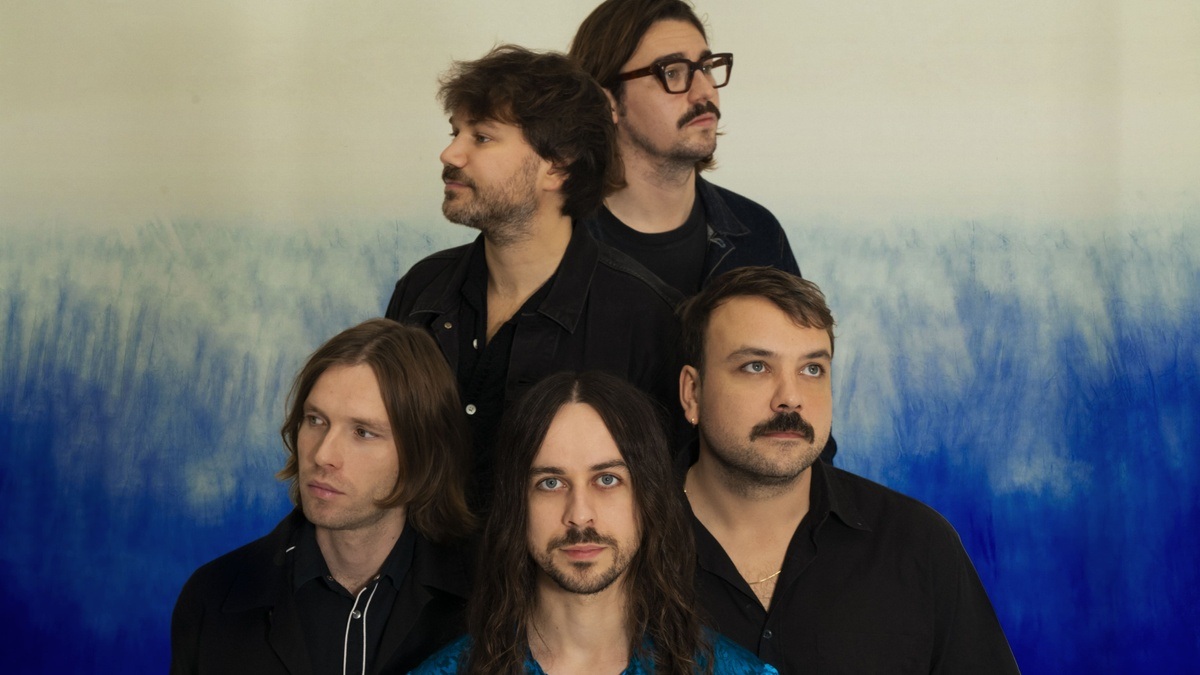
PHOTO: © Altin Gün
ALTIN GÜN // WIEN

In the organizer's words:
Dutch psychedelic quintetAltin Günreturns with their fifth album, *Garip*—their most accomplished and eclectic release to date, and a heartfelt tribute to legendary Turkish folk bard Neşet Ertaş.
Since bursting onto the scene in 2018 with their debut album, *On*, Amsterdam-based Altin Gün have been at the forefront of the 21st-century revival of Turkish-influenced psychedelic grooves. Starting off with a wah-wah and organ-heavy sound that effortlessly captured the spirit of Anatolian ’70s psych-funk masters like Barış Manço and Erkin Koray, they deepened and expanded their sound with 2021’s *Yol*, which incorporated synths and drum machines into the mix for a more ’80s-influenced dream-pop vibe.
But no matter how far out they’ve gone, they’ve always maintained a strong connection to the same Anatolian folk traditions that inspired those early pioneers. Founder and bassist Jasper Verhuist says: “We’re doing the same thing a lot of those artists were doing, which is playing Turkish traditionals and songs written by folk artists.”
Now, with their fifth album, *Garip*, they’ve brought that connection to their folk roots to the forefront, showcasing a collection of songs all originally written by Turkish folk legend Neşet Ertaş.
Ertaş (1938–2012) was a revered and much-loved Turkish singer, lyricist, and bağlama player, and a modern-day embodiment of the ancient aşık tradition of the folk bard and troubadour. Throughout his long career, he recorded more than 30 albums and wrote hundreds of songs—some of which were famously recorded by artists such as Barış Manço and Selda Bağcan.
For Altin Gün’s vocalist, keyboardist, and bağlama player, Erdinç Eçevit, performing a suite of Ertaş’s songs is a chance to reconnect with his roots. “Both of my parents are from Turkey, from the same region he is from,” he says. “It’s the music I grew up with. When I was five or six years old, my grandfather always had cassettes by Neşet Ertaş, and I used to listen to them all day long. I was too young back then to really understand the lyrics and their meaning, but I really liked the melodies.
Now, years later, Eçevit has fully immersed himself in Ertaş’s lyrics—messages from the heart that are, he says, “stories about what he’s facing in life. Traditional Turkish music is the blues of the Turkish people.”
Nowhere is this better exemplified than on “Gönul Daği,” one of Ertaş’s most famous compositions, brought to life here by Eçevit’s yearning, sensitive vocals. “‘Gönul Daği’ is about the pain of love, the storms of the heart, and the loneliness of longing,” says Eçevit. “He’s expressing what rural Anatolia has always felt—that love is both sacred and sorrowful, a force of nature.”
In Altin Gün’s hands, the tune becomes a languid funk-rock crawl with watery guitar, a loping bassline, and a palpable hint of mystery deepened by luxuriant string arrangements provided by the Stockholm Studio Orchestra. The strings feature on several tracks, drawing on influences including Egyptian popular music, Bollywood soundtracks, and Turkish Arabesque. But, as Verhuist explains, there’s another key element underpinning the sound. “There’s definitely a French-Italian influence in those arrangements,” he says. It’s a prime example of Altin Gün’s drive to cast their net wide and incorporate a wide-ranging array of eclectic musical influences.
The album opener, “Neredesin Sen,” is a throbbing, bass-led vamp with a strong early-’80s indie flavor. The closing track, “Bir Nazar Eyeldim,” is a breathtaking ballad with Eçevit’s pleading vocals unfolding over lush synth arpeggios and a sparse electronic rhythm. Along the way, the band also dabbles in prog-rock vibes, with Eçevit getting down and dirty on the synth’s pitch bend, and a laid-back Californian hippie-rock vibe. Check out Thijs Elzinga’s gorgeous slide guitar on the smoldering “Gel Kaçma Gel” to get a sense of just how relaxed they can sound.
Fans of Altun Gün’s earlier work will find plenty to love as well. The Anatolian influence remains strong—and not just in Eçevit’s aching vocals. Eçevit’s tight bağlama figures are woven throughout, creating a direct link back to those earliest influences on tracks like the smoky “Niğde Bağlari,” with its off-kilter folk rhythm and cavernous sense of the Anatolian steppes stretching out for miles.
“It’s our most eclectic album,” says Verhuist. “There’s a little bit of everything. The songs are harder to label. We wanted to do something different from what we’ve done before. Less in-your-face, less poppy, less obviously psych-rock. More just vibing.”
Garip is the sound of a band that’s constantly evolving—a mature musical unit with nothing to prove. And a band that’s having a whole lot of fun.
Venue:
Arena Wien - Main Hall
Baumgasse 80
1030 Vienna
Location

Accessibility information
We don't have any accessibility information for this event.
You can find everything about accessibility at Rausgegangen here.

You might enjoy this as well?














Noch mehr Events dieser Location-Page










Noch mehr Events von dieser Artist-Page