
In the organizer's words:
All information here.
According to Aeschylus.
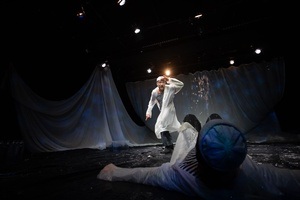
"It is a law: blood that flowed to earth demands blood." Tantalus dismembers his son Pelops, cooks him and serves him to the gods. Pelops, reassembled by the gods, pushes the charioteer Myrtilos off the cliff. His son Atreus slaughters Thyestes' children and presents their heads on a silver platter. Thyestes' son Aigisthos runs Atreus through with his sword. His cousin Agamemnon sacrifices his daughter Iphigenia to the gods for favorable winds. Clytemnestra and Aigisthus slay Agamemnon along with the seeress Cassandra. Their son Orest stabs Aigisthus and kills Clytemnestra. At the end of this chain of violence and counter-violence, who kills the matricide Orest? Who avenges Clytemnestra? Aeschylus' answer to this question unfolds in the third part of THE ORESTIA (458 BC). The tragedy is regarded as the founding document of the administration of justice in Athenian democracy: the Furies, ancient goddesses of vengeance, led by the shadow of Clytemnestra, attack Orest. But Athena, goddess of wisdom, appoints jurors at the last minute. And Orest is given a defense lawyer in Apollo; the vengeful spirits become unwilling prosecutors. Will Orest go free and the clan, cursed since Tantalus' original sin, finally find peace? Australian Adena Jacobs is staging the play for the first time in Germany after sensational productions in Melbourne, London and Vienna. She tells the story of the trial in haunting images to explore the age-old question of how the murder can be stopped.
This content has been machine translated.Location
You might enjoy this as well?











Events near you
Activities near you
Popular event locations
The best event recommendations for the Rausgegangen App!

Gemeinsam Events erleben
Events werden noch schöner wenn wir sie teilen! Deshalb kannst du dich jetzt mit Friends und anderen Usern vernetzen um Events gemeinsam zu besuchen. Loslegen