Formfindung / OPEN FORM:AT Workshop mit Gespräch
In the organizer's words:
What do our everyday routines write in the movement language of our body? What forms exist in a "dance-untrained" body?
How can I acquire different qualities of movement?
With these questions in mind, we go into the studio together and create short choreographic sequences. The body is first allowed to move freely to music and we capture short sequences of it. These become the form of our choreography. In the next step, we look at the properties of the objects in the room. FOR EXAMPLE: Curtains - soft, flowing, moving; wall - firm, straight, cool; ... We translate these properties of the objects into qualities of movement. Now the form of movement and the quality of movement are put together. How does the newly found quality of movement change the form?
Finally, we share our experiences.
Level: OPEN LEVEL (from beginner to professional)
Language(s): German or English if required
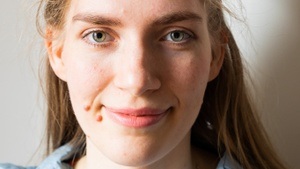
Johanna Greiner (she/her) began her dance training in Cologne as part of the collective "Labor im Quartier" (ZAIK) with performances at the DYNAMO Festival. In 2019, she continued her training in Spain at CobosMika SEED's. There she danced in creations by Kiko López and Ralf Jaroschinski. In 2022 she was at the Budapest Contemporary Dance Academy with Erasmus+. In 2023 she completed her dance and choreography studies at the Alma Mater Europaea - Dance Academy (Slovenia). There she worked with Irena Tomažin Zagoričnik and Lucija Romanova. She was then part of the Alpha Group under the direction of Darrel Toulon. She is currently developing "Kitchen Stories" with violinist Vita Kobal and the intergenerational piece "Verknüpfte Zeiten". Most recently she was
she was SuSo Artist in Residence 2025 in Sutivan, Croatia. Her work combines research, narrative, interdisciplinarity and social relevance.
______________________________
What do our daily routines express through our body's language of movement? What forms exist in a body "untrained in dance"?
How can I develop different qualities of movement?
With these questions in mind, we'll head to the studio together and create short choreographic sequences. First, the body is allowed to move freely to music, and we'll capture short sequences of this movement. These will form the basis of our choreography. In the next step, we'll examine the characteristics of the objects in the room. E.g.: Curtains-soft, flowing, flexible; wall-solid, straight, cool; ... We translate these characteristics of the objects into qualities of movement. Now the form of movement and the quality of movement are brought together. How does the newly discovered quality of movement change the form?
Finally, we share our experiences with one another.
Level: OPEN LEVEL (from beginners to advanced)
Language(s): German; English if required
Johanna Greiner (she/her) began her dance training in Cologne, including as part of the collective "Labor im Quartier" (ZAIK), performing at the DYNAMO Festival. In 2019, she continued her training in Spain at CobosMika SEED's. There, she danced in works by Kiko López and Ralf Jaroschinski. In 2022, she attended the Budapest Contemporary Dance Academy through Erasmus+. In 2023, she completed her studies in dance and choreography at the Alma Mater Europaea - Dance Academy (Slovenia). There, she worked with Irena Tomažin Zagoričnik and Lucija Romanova. Afterward, she was part of the Alpha Group under the direction of Darrel Toulon. She is currently developing "Kitchen Stories" with violinist Vita Kobal, as well as the intergenerational piece "Verknüpfte Zeiten." Most recently, she was a SuSo Artist in Residence 2025 in Sutivan, Croatia. Her work combines research, narrative, interdisciplinarity, and social relevance.
This content has been machine translated.Location










Events near you
Activities near you
Popular event locations
The best event recommendations for the Rausgegangen App!
