VIDEO: © Musikakademie der Studienstiftung PHOTO: © Musikakademie der Studienstiftung
Rite et Rhizome
So, 02. Aug 2026
19:00 - 21:00
Hochschule für Musik
München

In the organizer's words:
Rite and Rhizome
From the Roots of Faith
Lili Boulanger(1893–1918): Psalm 24“The Earth Belongs to the Lord”
Felix Mendelssohn Bartholdy(1809–1847): Symphony No. 5, “Reformation Symphony,”Op. 107
Igor Stravinsky(1882–1971): Mass
Olivier Messiaen(1908–1992):L’Ascension. Four Symphonic Meditations
August 1, 2026, 6:00 p.m., Gustav Mahler Hall, Toblach
August 2, 2026, 7:00 p.m., University of Music and Performing Arts, Arcisstraße 12, Munich
Pre-concert introduction: 6:00 p.m.
Advance ticket sales
Supported bythe Alumni Association of the Studienstiftung e. V.
Karola Pavone, soprano
Katharina Peetz, alto
Ludwig Obst, tenor
Torsten Meyer, baritone
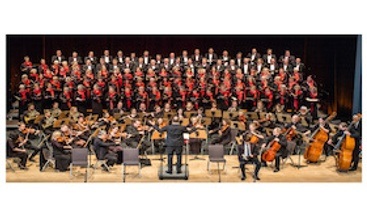
Choir and Orchestra ofthe Music Academy of the German National Academic Foundation
Conductor:Andreas Hotz
Choral Coach:Paul Krämer
Rhizome (from Ancient Greek rhizoma, “that which is rooted”): a system of interconnected shoots growing beneath the earth’s surface or close to the ground, borrowed as a conceptual model in philosophy, among other fields.
The Music Academy’s 2026 program focuses on the interconnections and ramifications of religions, liturgical practices, and individual faith. The four sacred compositions from the 19th and 20th centuries represent the (musical) exploration of one’s own or a decidedly different sacred rite and the connection between identity and religious beliefs.
Lili Boulanger’s powerful yet sensitive setting of Psalm 24, *La Terre appartient à l’Éternel* (1916) for choir and brass instruments, and Olivier Messiaen’s apotheotic orchestral work *L’Ascension* (1933) can be understood as musical creeds of two Catholics who were devout in the traditional sense. Felix Mendelssohn Bartholdy, although the son of a Jewish family, was raised as a Christian and baptized into the Lutheran faith. Nevertheless, he faced anti-Semitic hostility that persisted even after his death. His Reformation Symphony (1830), composed to mark the 300th anniversary of the Confessio Augustana, is a work of confession in which elements of both faith traditions—Christian and Jewish—may nevertheless resonate. Igor Stravinsky composed his *Mass* (1948) for choir and wind instruments while in exile in the United States; it follows the Catholic liturgy, although Stravinsky himself was a follower of the Russian Orthodox faith.
Using the image of the rhizome—interconnected root shoots—these pieces embark on a search for the threads connecting spiritual sentiment and ritual: Religion that springs from the private, most intimate feeling of faith, or individual faith that is shaped by external rituals and takes root within a person.
Price information:
Regular: €73.15 (Category 1) / €60.20 (Category 2) / €37.75 (Category 3) Reduced: €48.05 (Category 1) / €38.65 (Category 2) / €23.70 (Category 3)
Location







![JAZZFEST [19:30 - 23:30] with DIGILOGUE, Sabina Sciubba, Solaire](https://imageflow.rausgegangen.de/url/https%3A//s3.eu-central-1.amazonaws.com/rausgegangen/x4vhxKZXQLuuIjdy1ja2_07171b.jpg?width=384&height=216&mode=crop)