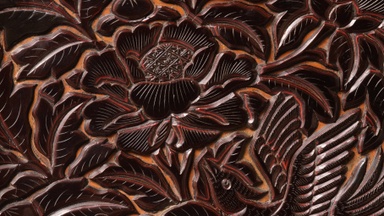
PHOTO: © Tablett mit Vogel- und Päoniendekor (Detail), Song-Dynastie (960–1279), HAStK/RBA, Marion Mennicken
Schichten und Schnitte. Chinesische Lackkunst

In the organizer's words:
For thousands of years, the sap of the lacquer tree has been one of the most precious materials in East Asia. It is used for coating, impregnating and coloring wooden objects and ceramics and produces surfaces of exceptional depth, shine and resistance.
The production of artisanal carved lacquer work became established in the Song dynasty (960-1279) and developed into a highly complex technique of impressive precision. Dozens of wafer-thin individual layers are applied, dried over a period of weeks and shaped in relief in precise cuts. Different colored layers dyed with mineral pigments are used to create finely tuned contrasts and contours. The luminous vermilion, which is still considered the epitome of Chinese carved lacquer, is characteristic, but outstanding artistic works were also created in the area of black lacquer and mother-of-pearl inlays. The filigree decorations of the carved lacquers mostly refer to myths and symbols of Daoism and Buddhism as well as to the world of birds and flowers.
The special exhibition brings together around 60 important Chinese lacquer works from the 12th to the early 17th century from a private collection in Cologne and is supplemented by selected works from the museum collection. Particular highlights include the Yunnan lacquer group from the Yuan dynasty (1279-1368), which has hardly been researched to date, and the elaborately crafted pieces for the imperial court of the Ming dynasty (1368-1644).
Price information:
9,50 Euro / 5, 50 Euro reduced
Location

More Shows
18.
Juni
11:00
Köln
Museum für Ostasiatische Kunst
5,50 to 9,50 €
20.
Juni
11:00
Köln
Museum für Ostasiatische Kunst
5,50 to 9,50 €
21.
Juni
11:00
Köln
Museum für Ostasiatische Kunst
5,50 to 9,50 €
23.
Juni
11:00
Köln
Museum für Ostasiatische Kunst
5,50 to 9,50 €
24.
Juni
11:00
Köln
Museum für Ostasiatische Kunst
5,50 to 9,50 €
25.
Juni
11:00
Köln
Museum für Ostasiatische Kunst
5,50 to 9,50 €
26.
Juni
11:00
Köln
Museum für Ostasiatische Kunst
5,50 to 9,50 €
27.
Juni
11:00
Köln
Museum für Ostasiatische Kunst
5,50 to 9,50 €
28.
Juni
11:00
Köln
Museum für Ostasiatische Kunst
5,50 to 9,50 €
30.
Juni
11:00
Köln
Museum für Ostasiatische Kunst
5,50 to 9,50 €
01.
Juli
11:00
Köln
Museum für Ostasiatische Kunst
5,50 to 9,50 €
02.
Juli
11:00
Köln
Museum für Ostasiatische Kunst
5,50 to 9,50 €
03.
Juli
11:00
Köln
Museum für Ostasiatische Kunst
5,50 to 9,50 €
04.
Juli
11:00
Köln
Museum für Ostasiatische Kunst
5,50 to 9,50 €
05.
Juli
11:00
Köln
Museum für Ostasiatische Kunst
5,50 to 9,50 €
07.
Juli
11:00
Köln
Museum für Ostasiatische Kunst
5,50 to 9,50 €
08.
Juli
11:00
Köln
Museum für Ostasiatische Kunst
5,50 to 9,50 €
09.
Juli
11:00
Köln
Museum für Ostasiatische Kunst
5,50 to 9,50 €
10.
Juli
11:00
Köln
Museum für Ostasiatische Kunst
5,50 to 9,50 €
11.
Juli
11:00
Köln
Museum für Ostasiatische Kunst
5,50 to 9,50 €
12.
Juli
11:00
Köln
Museum für Ostasiatische Kunst
5,50 to 9,50 €
14.
Juli
11:00
Köln
Museum für Ostasiatische Kunst
5,50 to 9,50 €
15.
Juli
11:00
Köln
Museum für Ostasiatische Kunst
5,50 to 9,50 €
16.
Juli
11:00
Köln
Museum für Ostasiatische Kunst
5,50 to 9,50 €
17.
Juli
11:00
Köln
Museum für Ostasiatische Kunst
5,50 to 9,50 €
18.
Juli
11:00
Köln
Museum für Ostasiatische Kunst
5,50 to 9,50 €
19.
Juli
11:00
Köln
Museum für Ostasiatische Kunst
5,50 to 9,50 €
21.
Juli
11:00
Köln
Museum für Ostasiatische Kunst
5,50 to 9,50 €
22.
Juli
11:00
Köln
Museum für Ostasiatische Kunst
5,50 to 9,50 €
23.
Juli
11:00
Köln
Museum für Ostasiatische Kunst
5,50 to 9,50 €
24.
Juli
11:00
Köln
Museum für Ostasiatische Kunst
5,50 to 9,50 €
25.
Juli
11:00
Köln
Museum für Ostasiatische Kunst
5,50 to 9,50 €
26.
Juli
11:00
Köln
Museum für Ostasiatische Kunst
5,50 to 9,50 €
28.
Juli
11:00
Köln
Museum für Ostasiatische Kunst
5,50 to 9,50 €
29.
Juli
11:00
Köln
Museum für Ostasiatische Kunst
5,50 to 9,50 €
30.
Juli
11:00
Köln
Museum für Ostasiatische Kunst
5,50 to 9,50 €
31.
Juli
11:00
Köln
Museum für Ostasiatische Kunst
5,50 to 9,50 €
01.
August
11:00
Köln
Museum für Ostasiatische Kunst
5,50 to 9,50 €
02.
August
11:00
Köln
Museum für Ostasiatische Kunst
5,50 to 9,50 €
04.
August
11:00
Köln
Museum für Ostasiatische Kunst
5,50 to 9,50 €
05.
August
11:00
Köln
Museum für Ostasiatische Kunst
5,50 to 9,50 €
06.
August
11:00
Köln
Museum für Ostasiatische Kunst
5,50 to 9,50 €
07.
August
11:00
Köln
Museum für Ostasiatische Kunst
5,50 to 9,50 €
08.
August
11:00
Köln
Museum für Ostasiatische Kunst
5,50 to 9,50 €
09.
August
11:00
Köln
Museum für Ostasiatische Kunst
5,50 to 9,50 €
11.
August
11:00
Köln
Museum für Ostasiatische Kunst
5,50 to 9,50 €
12.
August
11:00
Köln
Museum für Ostasiatische Kunst
5,50 to 9,50 €
13.
August
11:00
Köln
Museum für Ostasiatische Kunst
5,50 to 9,50 €
14.
August
11:00
Köln
Museum für Ostasiatische Kunst
5,50 to 9,50 €
15.
August
11:00
Köln
Museum für Ostasiatische Kunst
5,50 to 9,50 €
16.
August
11:00
Köln
Museum für Ostasiatische Kunst
5,50 to 9,50 €
18.
August
11:00
Köln
Museum für Ostasiatische Kunst
5,50 to 9,50 €
19.
August
11:00
Köln
Museum für Ostasiatische Kunst
5,50 to 9,50 €
20.
August
11:00
Köln
Museum für Ostasiatische Kunst
5,50 to 9,50 €
21.
August
11:00
Köln
Museum für Ostasiatische Kunst
5,50 to 9,50 €
22.
August
11:00
Köln
Museum für Ostasiatische Kunst
5,50 to 9,50 €
23.
August
11:00
Köln
Museum für Ostasiatische Kunst
5,50 to 9,50 €
25.
August
11:00
Köln
Museum für Ostasiatische Kunst
5,50 to 9,50 €
26.
August
11:00
Köln
Museum für Ostasiatische Kunst
5,50 to 9,50 €
27.
August
11:00
Köln
Museum für Ostasiatische Kunst
5,50 to 9,50 €
28.
August
11:00
Köln
Museum für Ostasiatische Kunst
5,50 to 9,50 €
29.
August
11:00
Köln
Museum für Ostasiatische Kunst
5,50 to 9,50 €
30.
August
11:00
Köln
Museum für Ostasiatische Kunst
5,50 to 9,50 €
01.
September
11:00
Köln
Museum für Ostasiatische Kunst
5,50 to 9,50 €
02.
September
11:00
Köln
Museum für Ostasiatische Kunst
5,50 to 9,50 €
03.
September
11:00
Köln
Museum für Ostasiatische Kunst
5,50 to 9,50 €
04.
September
11:00
Köln
Museum für Ostasiatische Kunst
5,50 to 9,50 €
05.
September
11:00
Köln
Museum für Ostasiatische Kunst
5,50 to 9,50 €
06.
September
11:00
Köln
Museum für Ostasiatische Kunst
5,50 to 9,50 €
08.
September
11:00
Köln
Museum für Ostasiatische Kunst
5,50 to 9,50 €
09.
September
11:00
Köln
Museum für Ostasiatische Kunst
5,50 to 9,50 €
10.
September
11:00
Köln
Museum für Ostasiatische Kunst
5,50 to 9,50 €
11.
September
11:00
Köln
Museum für Ostasiatische Kunst
5,50 to 9,50 €
12.
September
11:00
Köln
Museum für Ostasiatische Kunst
5,50 to 9,50 €
13.
September
11:00
Köln
Museum für Ostasiatische Kunst
5,50 to 9,50 €
15.
September
11:00
Köln
Museum für Ostasiatische Kunst
5,50 to 9,50 €
16.
September
11:00
Köln
Museum für Ostasiatische Kunst
5,50 to 9,50 €
17.
September
11:00
Köln
Museum für Ostasiatische Kunst
5,50 to 9,50 €
18.
September
11:00
Köln
Museum für Ostasiatische Kunst
5,50 to 9,50 €
19.
September
11:00
Köln
Museum für Ostasiatische Kunst
5,50 to 9,50 €
20.
September
11:00
Köln
Museum für Ostasiatische Kunst
5,50 to 9,50 €
22.
September
11:00
Köln
Museum für Ostasiatische Kunst
5,50 to 9,50 €
23.
September
11:00
Köln
Museum für Ostasiatische Kunst
5,50 to 9,50 €
24.
September
11:00
Köln
Museum für Ostasiatische Kunst
5,50 to 9,50 €
25.
September
11:00
Köln
Museum für Ostasiatische Kunst
5,50 to 9,50 €
26.
September
11:00
Köln
Museum für Ostasiatische Kunst
5,50 to 9,50 €
27.
September
11:00
Köln
Museum für Ostasiatische Kunst
5,50 to 9,50 €
29.
September
11:00
Köln
Museum für Ostasiatische Kunst
5,50 to 9,50 €
30.
September
11:00
Köln
Museum für Ostasiatische Kunst
5,50 to 9,50 €
01.
Oktober
11:00
Köln
Museum für Ostasiatische Kunst
5,50 to 9,50 €
02.
Oktober
11:00
Köln
Museum für Ostasiatische Kunst
5,50 to 9,50 €
03.
Oktober
11:00
Köln
Museum für Ostasiatische Kunst
5,50 to 9,50 €
06.
Oktober
11:00
Köln
Museum für Ostasiatische Kunst
5,50 to 9,50 €
07.
Oktober
11:00
Köln
Museum für Ostasiatische Kunst
5,50 to 9,50 €
08.
Oktober
11:00
Köln
Museum für Ostasiatische Kunst
5,50 to 9,50 €
09.
Oktober
11:00
Köln
Museum für Ostasiatische Kunst
5,50 to 9,50 €
10.
Oktober
11:00
Köln
Museum für Ostasiatische Kunst
5,50 to 9,50 €
11.
Oktober
11:00
Köln
Museum für Ostasiatische Kunst
5,50 to 9,50 €
13.
Oktober
11:00
Köln
Museum für Ostasiatische Kunst
5,50 to 9,50 €
14.
Oktober
11:00
Köln
Museum für Ostasiatische Kunst
5,50 to 9,50 €
15.
Oktober
11:00
Köln
Museum für Ostasiatische Kunst
5,50 to 9,50 €
16.
Oktober
11:00
Köln
Museum für Ostasiatische Kunst
5,50 to 9,50 €
17.
Oktober
11:00
Köln
Museum für Ostasiatische Kunst
5,50 to 9,50 €
18.
Oktober
11:00
Köln
Museum für Ostasiatische Kunst
5,50 to 9,50 €
20.
Oktober
11:00
Köln
Museum für Ostasiatische Kunst
5,50 to 9,50 €
21.
Oktober
11:00
Köln
Museum für Ostasiatische Kunst
5,50 to 9,50 €
22.
Oktober
11:00
Köln
Museum für Ostasiatische Kunst
5,50 to 9,50 €
23.
Oktober
11:00
Köln
Museum für Ostasiatische Kunst
5,50 to 9,50 €
24.
Oktober
11:00
Köln
Museum für Ostasiatische Kunst
5,50 to 9,50 €
25.
Oktober
11:00
Köln
Museum für Ostasiatische Kunst
5,50 to 9,50 €
27.
Oktober
11:00
Köln
Museum für Ostasiatische Kunst
5,50 to 9,50 €
28.
Oktober
11:00
Köln
Museum für Ostasiatische Kunst
5,50 to 9,50 €
29.
Oktober
11:00
Köln
Museum für Ostasiatische Kunst
5,50 to 9,50 €
30.
Oktober
11:00
Köln
Museum für Ostasiatische Kunst
5,50 to 9,50 €
31.
Oktober
11:00
Köln
Museum für Ostasiatische Kunst
5,50 to 9,50 €
01.
November
11:00
Köln
Museum für Ostasiatische Kunst
5,50 to 9,50 €
03.
November
11:00
Köln
Museum für Ostasiatische Kunst
5,50 to 9,50 €
04.
November
11:00
Köln
Museum für Ostasiatische Kunst
5,50 to 9,50 €
05.
November
11:00
Köln
Museum für Ostasiatische Kunst
5,50 to 9,50 €
06.
November
11:00
Köln
Museum für Ostasiatische Kunst
5,50 to 9,50 €
07.
November
11:00
Köln
Museum für Ostasiatische Kunst
5,50 to 9,50 €
08.
November
11:00
Köln
Museum für Ostasiatische Kunst
5,50 to 9,50 €
10.
November
11:00
Köln
Museum für Ostasiatische Kunst
5,50 to 9,50 €
11.
November
11:00
Köln
Museum für Ostasiatische Kunst
5,50 to 9,50 €
12.
November
11:00
Köln
Museum für Ostasiatische Kunst
5,50 to 9,50 €
13.
November
11:00
Köln
Museum für Ostasiatische Kunst
5,50 to 9,50 €
14.
November
11:00
Köln
Museum für Ostasiatische Kunst
5,50 to 9,50 €
15.
November
11:00
Köln
Museum für Ostasiatische Kunst
5,50 to 9,50 €
17.
November
11:00
Köln
Museum für Ostasiatische Kunst
5,50 to 9,50 €
18.
November
11:00
Köln
Museum für Ostasiatische Kunst
5,50 to 9,50 €
19.
November
11:00
Köln
Museum für Ostasiatische Kunst
5,50 to 9,50 €
20.
November
11:00
Köln
Museum für Ostasiatische Kunst
5,50 to 9,50 €
21.
November
11:00
Köln
Museum für Ostasiatische Kunst
5,50 to 9,50 €
22.
November
11:00
Köln
Museum für Ostasiatische Kunst
5,50 to 9,50 €
24.
November
11:00
Köln
Museum für Ostasiatische Kunst
5,50 to 9,50 €
25.
November
11:00
Köln
Museum für Ostasiatische Kunst
5,50 to 9,50 €
26.
November
11:00
Köln
Museum für Ostasiatische Kunst
5,50 to 9,50 €
27.
November
11:00
Köln
Museum für Ostasiatische Kunst
5,50 to 9,50 €
28.
November
11:00
Köln
Museum für Ostasiatische Kunst
5,50 to 9,50 €
29.
November
11:00
Köln
Museum für Ostasiatische Kunst
5,50 to 9,50 €
01.
Dezember
11:00
Köln
Museum für Ostasiatische Kunst
5,50 to 9,50 €
02.
Dezember
11:00
Köln
Museum für Ostasiatische Kunst
5,50 to 9,50 €
03.
Dezember
11:00
Köln
Museum für Ostasiatische Kunst
5,50 to 9,50 €
04.
Dezember
11:00
Köln
Museum für Ostasiatische Kunst
5,50 to 9,50 €
05.
Dezember
11:00
Köln
Museum für Ostasiatische Kunst
5,50 to 9,50 €
06.
Dezember
11:00
Köln
Museum für Ostasiatische Kunst
5,50 to 9,50 €
08.
Dezember
11:00
Köln
Museum für Ostasiatische Kunst
5,50 to 9,50 €
09.
Dezember
11:00
Köln
Museum für Ostasiatische Kunst
5,50 to 9,50 €
10.
Dezember
11:00
Köln
Museum für Ostasiatische Kunst
5,50 to 9,50 €
11.
Dezember
11:00
Köln
Museum für Ostasiatische Kunst
5,50 to 9,50 €
12.
Dezember
11:00
Köln
Museum für Ostasiatische Kunst
5,50 to 9,50 €
13.
Dezember
11:00
Köln
Museum für Ostasiatische Kunst
5,50 to 9,50 €
15.
Dezember
11:00
Köln
Museum für Ostasiatische Kunst
5,50 to 9,50 €
16.
Dezember
11:00
Köln
Museum für Ostasiatische Kunst
5,50 to 9,50 €
17.
Dezember
11:00
Köln
Museum für Ostasiatische Kunst
5,50 to 9,50 €
18.
Dezember
11:00
Köln
Museum für Ostasiatische Kunst
5,50 to 9,50 €
19.
Dezember
11:00
Köln
Museum für Ostasiatische Kunst
5,50 to 9,50 €
20.
Dezember
11:00
Köln
Museum für Ostasiatische Kunst
5,50 to 9,50 €
22.
Dezember
11:00
Köln
Museum für Ostasiatische Kunst
5,50 to 9,50 €
23.
Dezember
11:00
Köln
Museum für Ostasiatische Kunst
5,50 to 9,50 €
26.
Dezember
11:00
Köln
Museum für Ostasiatische Kunst
5,50 to 9,50 €
27.
Dezember
11:00
Köln
Museum für Ostasiatische Kunst
5,50 to 9,50 €
29.
Dezember
11:00
Köln
Museum für Ostasiatische Kunst
5,50 to 9,50 €
30.
Dezember
11:00
Köln
Museum für Ostasiatische Kunst
5,50 to 9,50 €
02.
Januar
11:00
Köln
Museum für Ostasiatische Kunst
5,50 to 9,50 €
03.
Januar
11:00
Köln
Museum für Ostasiatische Kunst
5,50 to 9,50 €
05.
Januar
11:00
Köln
Museum für Ostasiatische Kunst
5,50 to 9,50 €
06.
Januar
11:00
Köln
Museum für Ostasiatische Kunst
5,50 to 9,50 €
07.
Januar
11:00
Köln
Museum für Ostasiatische Kunst
5,50 to 9,50 €
08.
Januar
11:00
Köln
Museum für Ostasiatische Kunst
5,50 to 9,50 €
09.
Januar
11:00
Köln
Museum für Ostasiatische Kunst
5,50 to 9,50 €
10.
Januar
11:00
Köln
Museum für Ostasiatische Kunst
5,50 to 9,50 €
12.
Januar
11:00
Köln
Museum für Ostasiatische Kunst
5,50 to 9,50 €
13.
Januar
11:00
Köln
Museum für Ostasiatische Kunst
5,50 to 9,50 €
14.
Januar
11:00
Köln
Museum für Ostasiatische Kunst
5,50 to 9,50 €
15.
Januar
11:00
Köln
Museum für Ostasiatische Kunst
5,50 to 9,50 €
16.
Januar
11:00
Köln
Museum für Ostasiatische Kunst
5,50 to 9,50 €
17.
Januar
11:00
Köln
Museum für Ostasiatische Kunst
5,50 to 9,50 €
19.
Januar
11:00
Köln
Museum für Ostasiatische Kunst
5,50 to 9,50 €
20.
Januar
11:00
Köln
Museum für Ostasiatische Kunst
5,50 to 9,50 €
21.
Januar
11:00
Köln
Museum für Ostasiatische Kunst
5,50 to 9,50 €
22.
Januar
11:00
Köln
Museum für Ostasiatische Kunst
5,50 to 9,50 €
23.
Januar
11:00
Köln
Museum für Ostasiatische Kunst
5,50 to 9,50 €
24.
Januar
11:00
Köln
Museum für Ostasiatische Kunst
5,50 to 9,50 €
26.
Januar
11:00
Köln
Museum für Ostasiatische Kunst
5,50 to 9,50 €
27.
Januar
11:00
Köln
Museum für Ostasiatische Kunst
5,50 to 9,50 €
28.
Januar
11:00
Köln
Museum für Ostasiatische Kunst
5,50 to 9,50 €
29.
Januar
11:00
Köln
Museum für Ostasiatische Kunst
5,50 to 9,50 €
30.
Januar
11:00
Köln
Museum für Ostasiatische Kunst
5,50 to 9,50 €
You might enjoy this as well?

Get the Rausgegangen App!
Be always up-to-date with the latest events in Köln!










Noch mehr Events dieser Location-Page