PHOTO: © UMS'nJIP
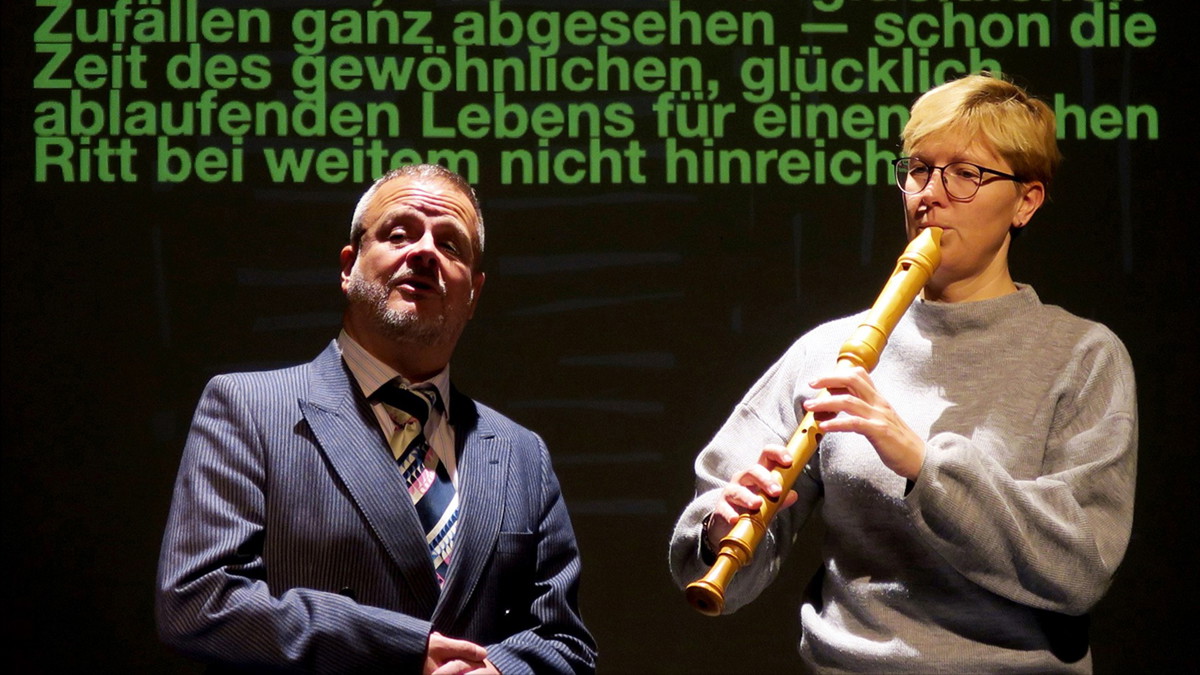
UMS'nJIP: KAFKA - Liederabend
In the organizer's words:
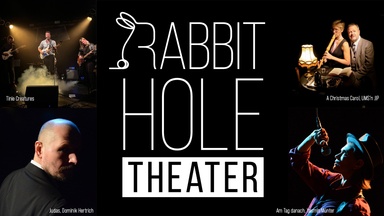
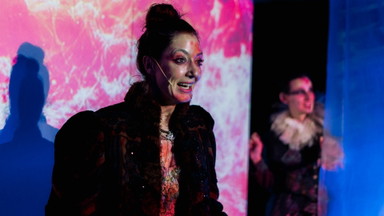
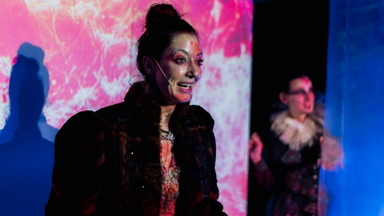
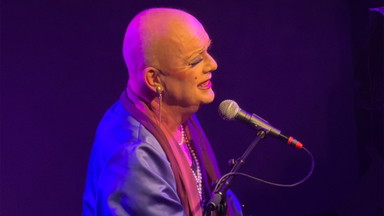
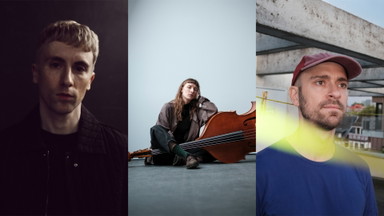
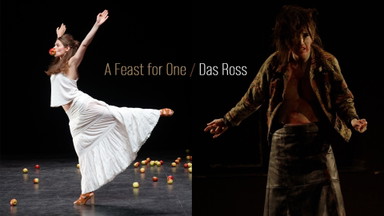
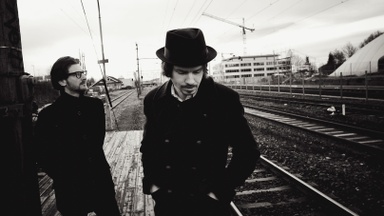
Following the performances of “Woyzeck” and “A Christmas Carol,” the Swiss duo UMS’nJIP is returning to the Rabbit Hole Theater!
This time, Ulrike Mayer-Spohn and Javier Hagen will present their electropop opera “Sancho” (Cervantes) and the song recital “Kafka: Literature Meets Composition.” UMS’nJIP’s works can best be classified as instrumental theater and conceptual music theater; they play with virtuosity—and not without irony—with aesthetics that span experimental music and vocal performance, video art, and electropop—an unconventional pocket-sized format that combines an artistic high-tech laboratory with maximum agility. Experience an experimental, at times challenging, yet at other times pop-infused musical and literary journey in the unmistakable UMS’nJIP style.
JIP ad kafka:
My first encounter with Kafka—as required reading in school—was*The Metamorphosis*; my reaction: confusion and fascination at the same time. Later, his collected short stories were added to the mix, and ever since, Kafka’s texts have never let me go. Major works by various composers, whose world premieres I was entrusted with, have engaged with Kafka: Beat Gysin’s*Marienglas*, for example, with*The Castle*, or Thorsten Töpp’s*à rien*with Kafka’s final diary entry. Incidentally, Kafka is also the first author whose work I set to music, and thus the one who has accompanied me the longest in my compositional journey. Kafka’s precision, powers of observation, nuance, and multi-perspectivity set the standard for me, and I am still enchanted today by his remarkable and memorable poetry.
Thus, this cycle brings together six of my favorite stories into a single, through-composed work.
1. Absent-Minded Gazing Out
2. At Night
3. I Have Returned
4. The Desire to Become a Native American
5. The Next Village
6. From: The Hunger Artist
With the exception of No. 3,“I Have Returned,” and No. 6,“The Hunger Artist,” the stories are extremely short, usually only a few lines long.“The Hunger Artist”is concisely written. Its ending is noteworthy: the cage in which the Hunger Artist dies, forgotten, is later used to imprison a panther. It is obvious to read this as a reference to Rilke’s“Panther.” Kafka was familiar with Rilke’s work, and both grew up in Prague’s German-speaking milieu. And so Rilke’s*Panther*—whispered softly—rounds off this collection of Kafka stories as an epilogue.
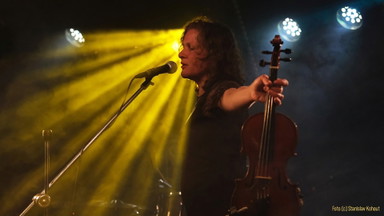
Over the course of several years,*Kafka*has evolved into a modular composition for voice, recorder, recorded track (and, optionally, a small instrumental ensemble—flute, clarinet, violin, cello), expanding to the scale of a full-length performance. The recorded track is constantly present and simultaneously establishes the space in which sound events—both live and recorded—take place. These behave like objects whose presence in the space seems to reveal itself only over time. These objects are quiet, individual clusters of sound (for the vertical axis) or melodic lines (for the horizontal axis), evolving or fading into nothingness—resembling an experimental constellation, metaphorically representing the wishes—usually in vain—expressed in the texts set to music.
Location
Accessibility information
You can find everything about accessibility at Rausgegangen here.






Noch mehr Events dieser Location-Page