Dieses Event ist vorbei. Hier geht’s zu
coolen aktuellen Events.
![Ursonate [Wir spielen, bis uns der Tod abholt]](https://imageflow.rausgegangen.de/url/https%3A//s3.eu-central-1.amazonaws.com/rausgegangen/2Q5UCiSXTDmDg3ik5zQZ_DT%20-%20Signet%20-%20RGB%20-%20black.jpg?width=1200&height=900&mode=crop)
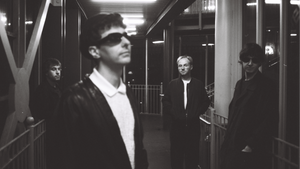
In the organizer's words:
Unconventional and bizarre, anarchistic and senseless: collage art made of trash, twisted grottos, an alphabet from behind, a sprawling private apartment without an outside world, nonsense poems. Superstition and conventions taken ad absurdum to the point of absolute senselessness became the trademark of the Hanoverian Dada artist, poet, composer and commercial artist Kurt Schwitters.
Yet his art was shaped by the aftershocks of World War I, in which an unimagined fury of destruction was unleashed. The war had shifted from the battlefield to the mind. With the war, the familiar world disintegrated into its fragments, all valid contexts of meaning lost their significance. A deep-rooted feeling of disorientation spread.
Art served Schwitters as a counterworld to the existing bourgeois society, as a whimsical anti-cosmos beyond established logics: Merz-Kunst, as he called his own art. A syllable he had cut out of the word of the Kom merz - und Privatbank of the time. For him, Merz meant overcoming the oppositions of world and art, sense and nonsense, and the boundaries between the arts.
Schwitters worked meticulously over nine years (1923 - 1932) on his sound poem Ursonate , while the crises of the modern world raged around him. Although he followed the structure of a classical, four-movement sonata, he sorted his feral language material into it and reshaped it into an anti-sonata - a playful deconstruction of educated bourgeois art. In this way, Schwitters liberated the ideologically appropriated language by reducing it to its original sounds in order to dissolve all semantic references and to be able to create new meaning through the atomization of language. And even this absurd sound poetry with roaring, hissing, crowing was for him revolt and the beginning of something new. Vive la crise! Or in the words of the Bürgerschreck: Fümms bö wö tää zää Uu.
Yet his art was shaped by the aftershocks of World War I, in which an unimagined fury of destruction was unleashed. The war had shifted from the battlefield to the mind. With the war, the familiar world disintegrated into its fragments, all valid contexts of meaning lost their significance. A deep-rooted feeling of disorientation spread.
Art served Schwitters as a counterworld to the existing bourgeois society, as a whimsical anti-cosmos beyond established logics: Merz-Kunst, as he called his own art. A syllable he had cut out of the word of the Kom merz - und Privatbank of the time. For him, Merz meant overcoming the oppositions of world and art, sense and nonsense, and the boundaries between the arts.
Schwitters worked meticulously over nine years (1923 - 1932) on his sound poem Ursonate , while the crises of the modern world raged around him. Although he followed the structure of a classical, four-movement sonata, he sorted his feral language material into it and reshaped it into an anti-sonata - a playful deconstruction of educated bourgeois art. In this way, Schwitters liberated the ideologically appropriated language by reducing it to its original sounds in order to dissolve all semantic references and to be able to create new meaning through the atomization of language. And even this absurd sound poetry with roaring, hissing, crowing was for him revolt and the beginning of something new. Vive la crise! Or in the words of the Bürgerschreck: Fümms bö wö tää zää Uu.
Location
You might enjoy this as well?



Noch mehr Events dieser Location-Page
Deutsches Theater Berlin

Be always up-to-date with the latest events in Berlin!


Events near you
Activities near you
Popular event locations
The best event recommendations for the Rausgegangen App!
