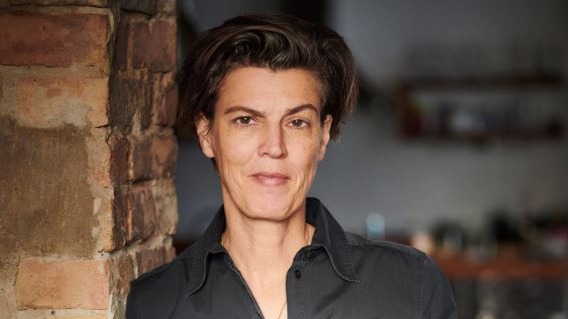
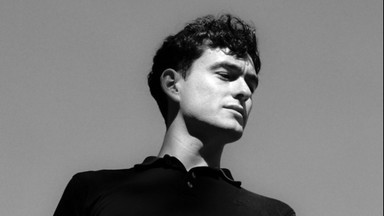
PHOTO: © Andreas Labes
CAROLIN EMCKE "Was zählt ein Mensch?“

In the organizer's words:
A collaboration between Literaturherbst Heidelberg and Karlstorbahnhof Heidelberg
“What is a human being worth?” What does radical humanism mean? Are there limits to empathy for others? What obligations does the memory of history impose on us? Are there limits to the duty to speak out in the name of human rights? Or should nothing prevent us from perceiving others as part of the universal “we”? Carolin Emcke was already asking herself these questions before October 7 and the events in Gaza. But since then, they have become even more urgent. Ultimately, it comes down to the existential question: What is a human being worth? Carolin Emcke discusses this with the renowned historian, director of the Center for Research on Anti-Semitism at TU Berlin, and author Stefanie Schüler-Springorum.
Carolin Emcke, born in 1967, studied philosophy in London, Frankfurt am Main, and Harvard. She earned her doctorate with a dissertation on the concept of “collective identities.” From 1998 to 2013, Carolin Emcke traveled to crisis regions around the world and reported on them. In 2003–2004, she served as a visiting lecturer in political theory at Yale University. She is a freelance journalist and regularly engages in artistic projects and interventions, including the “Krieg erzählen” (Telling Stories of War) theme days at the Haus der Kulturen der Welt. For over ten years, Carolin Emcke has organized and moderated the monthly discussion series “Streitraum” at the Schaubühne Berlin. She has received numerous awards for her work, including the Theodor Wolff Prize, the Otto Brenner Prize for Critical Journalism, the Lessing Prize of the Free State of Saxony, and the Merck Prize of the German Academy for Language and Literature. In 2016, she received the Peace Prize of the German Book Trade. “Was zählt ein Mensch?” (published in 2026 by S. Fischer) is the bestselling author’s latest book.
“Emcke’s writings keep alive the question of whether it matters when people are drowned out and silenced while others eloquently exercise their power.” Elisabeth von Thadden, DIE ZEIT
Stefanie Schüler-Springorum is an author, historian, and, since 2011, director of the Center for Research on Anti-Semitism at the Technical University of Berlin, as well as co-director of the Selma Stern Center for Jewish Studies Berlin-Brandenburg since 2012. Previously, she worked at the Topography of Terror Foundation and headed the Institute for the History of German Jews in Hamburg from 2001 to 2011. Her most recent book is *Unerwünscht: West German Democracy and the Victims of the Nazi Regime*, in which she presents, for the first time, a portrait of postwar West German society from the perspective of those who were persecuted under National Socialism. In doing so, she tells a story that has been largely overlooked until now and describes the experiences of Jewish survivors, Sinti, and Roma, as well as former forced laborers and homosexuals in West Germany during the first postwar decades.
Location
Accessibility information
We don't have any accessibility information for this event.
You can find everything about accessibility at Rausgegangen here.
You might enjoy this as well?











Noch mehr Events dieser Location-Page