Sonderführung Deutzer Zentralwerk der Schönen Künste
In the organizer's words:
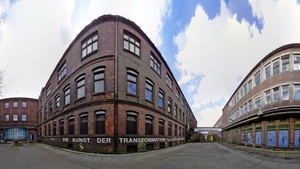
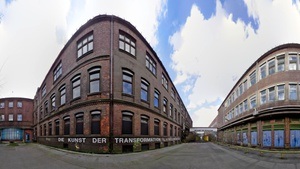
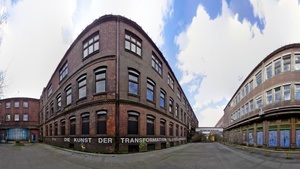
We cordially invite you on a journey through space and time at the Deutz Central Plant of Fine Arts, where history and stories, memories and visions of the future will be explored. With views of the building and the headquarters building of the world's first gas engine factory, some of which are 150 years old and thus important witnesses to the industrial heritage of the city of Cologne, the process of development is presented from an artistic perspective of the last 14 years. The thoughts on the future design of the area as the Otto & Lange Quarter are constant companions. The guided tour of the Klöckner-Humboldt-Deutz AG (KHD) site in the south of Cologne's Mülheim district takes place in three essential dimensions: the spatial, the temporal and the thematic inspection of the industrial monument.
Space. The spaces, rooms and halls of the site - from the conference room on the executive floor to the old forge - contain personal memories and fragments of great history, they recall individual lives and great upheavals. Spaces are not just demarcated containers, they are defined by the people and the encounters that take place in them. Through artistic exploration, the voices of the people who shaped and continue to shape these spaces are made audible again. Encounters with contemporary witnesses and historians, with visitors and artists thus form the starting point of the tour.
Time. The staging and artistic restoration and design of the site and the individual rooms and parts of the building are derived from the examination of the 150-year history of this place. The transformation of the industrial site into a place of play and testing marks the beginning of the link between the past and the present, through which old traces are uncovered that are also visible today and lead into the future. Sketches and excerpts from productions and stagings at the Deutz Zentralwerk der Schönen Künste since 2011 document the fusion of the site with the various stages of time. Thus the location is not only a backdrop and inspiration, but itself appears as a witness to change and protagonist. Over time, the engagement with the performance venue changes - the theater becomes a participatory laboratory for visitors.
Four themes. Four major social themes lie as crossbeams between the spaces and times. The construction of the building complex is superficially linked to the big question of the future of mobility at that time. Transferred to the present, mobility and climate change can no longer be thought of without each other. The parallels between the industrialization of the 19th century and the digitalization of today's working world are unmistakable. The change in work and technology spans all areas of work and the entire history of the first gas engine factory and is still a major concern today. Then as now, a secure job and a financial livelihood are also motivations for leaving one's home town; the workplace is therefore also a place of migration and a meeting place for people with the most diverse biographies. Evidence of the negotiation of individual and collective interests, the representation of the workforce and the handling of changes to familiar structures are still clearly visible today in the administrative wing of the KHD. The debate about democracy and participation is highly topical at various levels, not least for the further development of the site.
After all, the final chapter has not yet been written: the future of the Otto & Lange Quarter. There is the vision and the desire to lead this area into a responsible and prudent future based on history and art. At the end of the journey, the first tour is complete, but it is like any exploration: food for thought and an opening for new perspectives and evaluations.
Price information:
Registration is desirable: info@raum13.com
Location
Organizer
You might enjoy this as well?



Events near you
Activities near you
Popular event locations
The best event recommendations for the Rausgegangen App!
