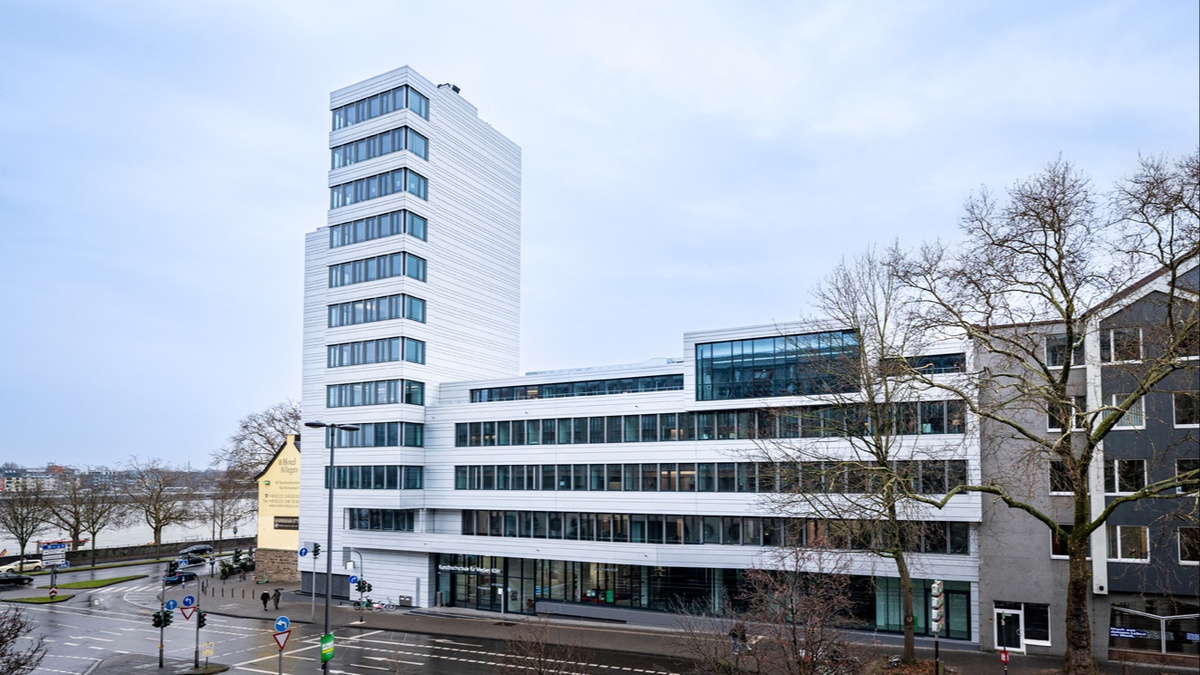
"Stop Filming Us but Listen", Filmvorführung in Anwesenheit der Regisseurin Bernadette Vivuya
In our words:
The documentary "Stop Filming Us but Listen" reflects critically on its own production and offers a reflection on Western images and colonial structures in the cultural scene of the Congo. After the screening, you can look forward to an exciting discussion with the filmmakers to delve deeper into the complex issues raised by the film.

In the organizer's words:
The director Bernadette Vivuya and the producer Ganza Buroko of the documentary "Stop Filming Us but Listen" are guests at the KHM.
Following the screening, Prof. Alejandro Bachmann will lead a discussion with the two of them. The discussion will be translated from French by Andrea Kirchhartz.
A film as a response, extension and contextualization of another film: In 2020, Dutch director Joris Postema made a documentary - "Stop Filming Us" - about the cultural scene in the city of Goma in the east of the Democratic Republic of Congo. When he encounters resistance from the local people, it becomes a film about the question of who films whom and for what purpose.
The journalist and filmmaker Bernadette Vivuya appropriates the material from this film in order to place it together with Kagoma Ya Twahirwa in the wider context of colonial images and history, neo-colonial politics and post-colonial practices on site: In the vicinity of the local cultural association Yolé!, she observes the confrontation of young men and women with the propaganda images of the former Belgian colonial power, talks to artists about their practices and how they relate to common Western images of life in African countries, discusses the continuation of colonial structures in development aid and questions the problems of Western funding for African art. The call to Western filmmakers to refrain from reproducing the same old view is thus supplemented by a self-conscious offer to listen and learn from it.
"Stop Filming Us but Listen" (2022, CD/NL, 72 min., OmeU) is a film that constantly questions and reflects on its own production conditions. In its form, it seems like a contemporary extension of the documentary mode that Jean Rouch called Cinéma Vérité - a director who was accused by Ousmane Sembène in 1965 of looking at people in his ethnographic films as if they were insects.
The director and producer Ganza Buroko will attend the screening and then discuss the issues raised by the film in greater depth with Alejandro Bachmann, Professor of Film History and Film Theory at the KHM, and the audience.
Location



Events near you
Activities near you
Popular event locations
The best event recommendations for the Rausgegangen App!
