'Von hier nach dort: Praxis, Distanz und Selbstpositionierung' mit Julia Cimafiejeva, Hiwa K und Farahnaz Sharifi, moderiert von Azar Mahmoudian
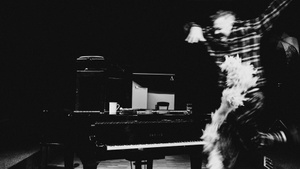
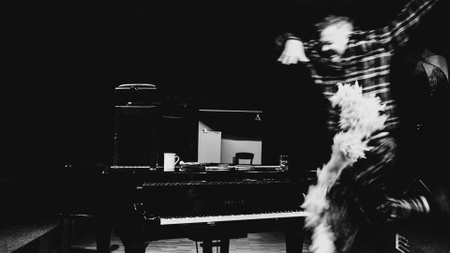
In the organizer's words:
The panel brings together artists and writers to reflect on personal experiences of migration and re-arrival as well as the continuation of artistic practice in changing contexts. Rather than approaching the topic abstractly, the discussion will focus on lived experience: how changes of place are perceived, processed and translated into creative work. The conversation explores how changing environments affect the relationship to place, audience and self. What does it mean to continue working elsewhere, far from home and political conflict? How does distance reshape the perception of the former home, and what new forms of attention, responsibility or distancing emerge? The panel will also look at the emotional dimensions of migration - feelings of disorientation, freedom, restriction or redefinition - and how these become visible in different artistic practices. By bringing together perspectives from literature, visual art and film, the panel will ask whether these experiences are similar across disciplines or whether they produce independent forms of reaction.
Julia Cimafiejeva is a Belarusian writer and translator. She is the author of six volumes of poetry in Belarusian and the non-fiction book Minsk Diary (in English). Her US debut Motherfield: Poems & Belarusian Protest Diary (Deep Vellum, 2022) was shortlisted for the Derek Walcott Prize for Poetry. Most recently published in German Ich zerschneide die Geschichte. Lyrik und Collagen (Edition Frölich, 2025) and Blutkreislauf (edition.fotoTAPETA, 2025). In 2020, she took part in the protests in Belarus and has lived in exile in Europe ever since. She was a fellow of the DAAD Berlin Artists-in-Residence Program (2025) and Richard von Weizsäcker Fellow of the Robert Bosch Academy (2026).
Hiwa K is an artist born in Kurdistan, Iraq, who lives and works in Berlin and in international contexts. His practice combines sculpture with film, performance and music and explores issues of memory, migration, knowledge transfer and informal pedagogy. His works have been shown in museums and biennials worldwide, including the Biennale di Venezia (2015) and documenta 14 (2017). He has received numerous awards, including the Arnold Bode Prize. Since April 2026, he has been Professor of Sculpture at the Braunschweig University of Art (HBK).
Farahnaz Sharifi is an Iranian filmmaker and author who now lives in Germany. If not the first, she is one of the early voices in Iranian cinema to use personal and family archives for storytelling, transforming them from private to collective history. Her latest film My Stolen Planet premiered in the 2024 Berlinale Panorama, was nominated for the European Film Academy Award and won over 25 prizes. She is currently working on a new film project and her second book.
Azar Mahmoudian is an independent curator and educator working between Tehran and other places. Her current practice deals with collective and self-organized forms of learning as well as questions of anonymity within cultural practices.
This content has been machine translated.Price information:
Online registration
Location
You might enjoy this as well?



Events near you
Activities near you
Popular event locations
The best event recommendations for the Rausgegangen App!
