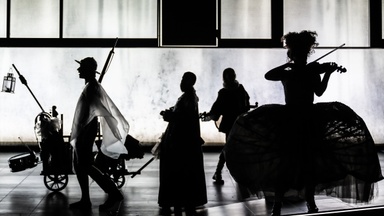
Fanny und Alexander
In the organizer's words:
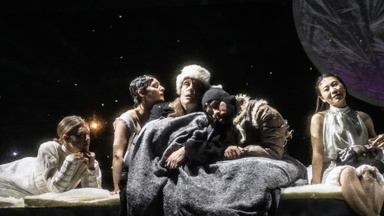
Fanny and Alexander grow up in the early 20th century in the upper-class Ekdahl family, which is involved in the theater. Their father is a theater director, and their mother is an actress. The children are naturally part of lavish parties, theater rehearsals, and conversations about literature. Their happy childhood comes to an abrupt end when their father collapses and dies during a rehearsal. The father’s spirit appears to his grieving son time and again. Their mother, Emilie, remarries a bishop who instructs her to leave everything familiar behind—all her possessions—and follow him with her children into his ascetic world. There, they experience repression and violence. Despite being pregnant again, Emilie wants to leave the bishop, who then threatens to take away her custody of her biological children. The bishop dies in a fire at his home. Emilie, Fanny, and Alexander return to the Ekdahl family. The matriarch, Emilie’s mother-in-law Helene, quotes the closing lines from August Strindberg’s*A Dream Play*: “Anything can happen; everything is possible and probable. Time and space do not exist.”
In his final feature film, released in 1982, the Swedish theater and film director Ingmar Bergman adopts the perspective of Alexander, who observes the world of adults as they love, lie, play, and die. These subtle observations of everyday life intertwine with the great metaphysical questions of humanity that preoccupied Bergman in his body of work, upon which he reflects in this film. For Icelandic director Thorleifur Örn Arnarsson, also the child of a theater family, the film is above all a declaration of love for the power of art—and in particular, of theater as a place of imagination that overcomes all things.
Location

Accessibility information
We don't have any accessibility information for this event.
You can find everything about accessibility at Rausgegangen here.
Weitere Termine von Fanny und Alexander
19.
September
19:00
Düsseldorf
Düsseldorfer Schauspielhaus - D’haus
8,00 to 16,00 €
24.
September
20:00
Düsseldorf
Düsseldorfer Schauspielhaus - D’haus
8,00 to 16,00 €
27.
September
16:00
Düsseldorf
Düsseldorfer Schauspielhaus - D’haus
8,00 to 16,00 €










Noch mehr Events dieser Location-Page