PHOTO: © Dr. Jan Eberhardt (HdA)
Faszination Astronomie: Die Suche nach der zweiten Erde - wie wir Planeten bei fremden Sternen entdecken
Do, 15. Okt 2026
19:00 - 20:30
Heidelberg

In the organizer's words:
Are we alone in the universe? This question has fascinated humanity for centuries. But while it long belonged to the realm of philosophy or science fiction, modern astronomy is now seeking answers using concrete scientific methods. Since the discovery of the first planet outside our solar system in 1995, a completely new field of research has developed rapidly: the search for so-called exoplanets. To date, telescopes in space and on Earth have detected thousands of these distant worlds.
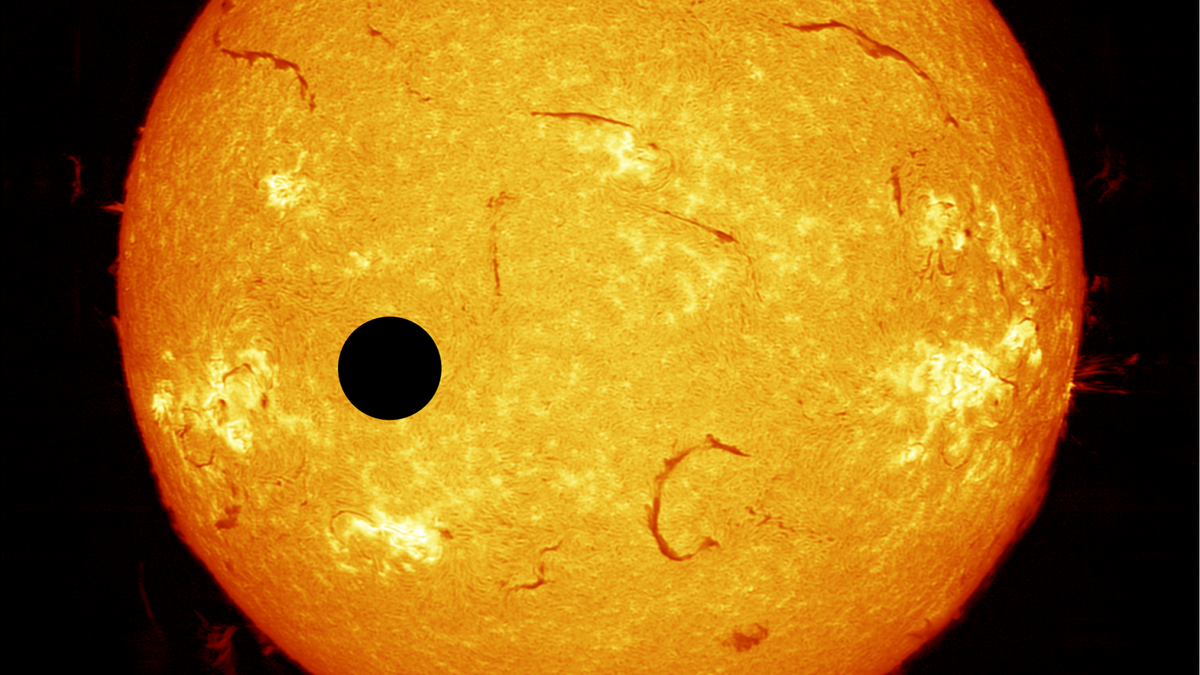
But how do you find a planet that is trillions of kilometers away and doesn’t emit any light of its own? Since they usually can’t be seen directly, astronomers employ ingenious cosmic detective work. This lecture takes you on a journey through the most common search methods: from the transit method, in which a planet periodically causes a slight dimming of its star, to the radial velocity method, which measures the tiny “wobble” of a star caused by the gravity of its companion. Learn how researchers use this data to determine the size, mass, and even the atmospheres of alien worlds. Finally, we’ll take a look into the future: How close are we to discovering a true “second Earth” where liquid water—and thus life—would be possible?
Dr. Jan Eberhardt served as a student research assistant at the House of Astronomy from 2013 to 2021. He earned his Ph.D. from the MPIA in 2025 with a dissertation titled “Discovery of Exoplanets.”
You can find a map showing how to get to the House of Astronomy here:
Price information:
Purchased tickets cannot be returned or exchanged. Admission is no longer available after the start of the event; participation cannot be guaranteed in the event of delays.
Location

You might enjoy this as well?














Noch mehr Events dieser Location-Page