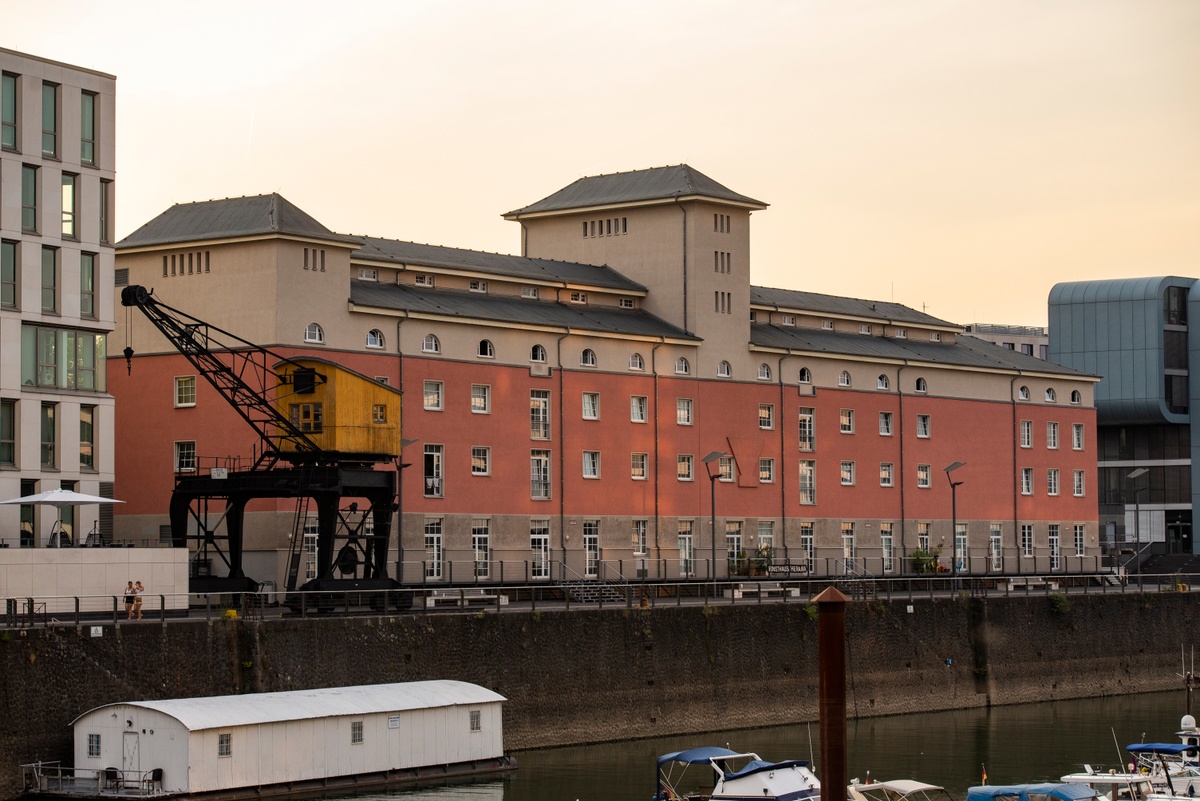
PHOTO: © bayenwerft-kunsthaus-rhenania-ev
Kerstin de Witt & Gerald Hambitzer // Andreas Voccia, live at Chamber Remix Cologne
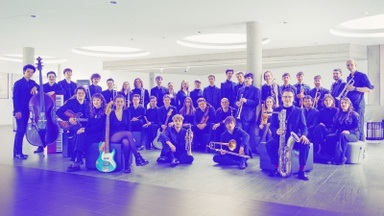
In the organizer's words:
Chamber Remix Cologne
chamber:
Kerstin de Witt
Gerald Hambitzer
Remix:
Andreas Voccia
more info on: https://chamber-remix.de/
Kerstin de Witt - Csakan
Gerald Hambitzer - fortepiano
Andreas Voccia - live electronics, modular synthesize
The first half of the concert is dedicated to a very special sound and a great rarity. The recorder is usually mentioned and used in connection with early music. It has its place in medieval, renaissance and baroque music. In contemporary chamber music and as a solo instrument it can now boast a wealth of literature. However, recorder instruments were also used during the Classical and Romantic periods, mostly in the form of an English or French flageolet or a so-called Viennese csakan. - In this program, the two musicians dedicate themselves to this special literature with replicas of original instruments. The program includes works by Georg Philipp, Carl Philipp Emanuel Bach, Georg Philipp Telemann, Johann Nepomuk Hummel, Ernest Krähmer and Felix Mendelssohn Bartholdy. Both Kerstin de Witt and Gerald Hambitzer have enriched Cologne's cultural life for many years as renowned artists. Kerstin de Witt as a member of Flautando Köln and professor at the HfMT and Gerald Hambitzer as part of Concerto Köln and as professor and head of the Early Music Department at the HFMT.
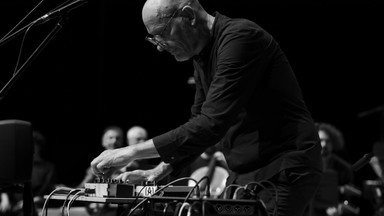
Andreas Voccia lives and works as a musician in Berlin. Originally trained as a jazz guitarist, he now devotes himself primarily to the modular synthesizer in order to implement the compositional principles of contemporary classical music in an improvisational and interactive environment. In addition to his work as a solo artist, he is involved in several projects in the Berlin experimental and free jazz scene. Influenced by composers such as Iannis Xenakis, Gérard Grisey, Francisco Guerrero and Alberto Posadas, Andreas continuously works on a musical aesthetic that depicts the complex phenomena of the natural sciences and makes them audible. It is particularly important to him to find a poetry in these processes that addresses the tension between the inner world and the outer world.
Location
Accessibility information
We don't have any accessibility information for this event.
You can find everything about accessibility at Rausgegangen here.