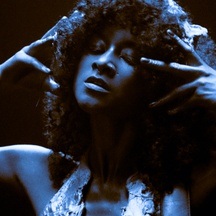
PHOTO: © Yukiko/HKW
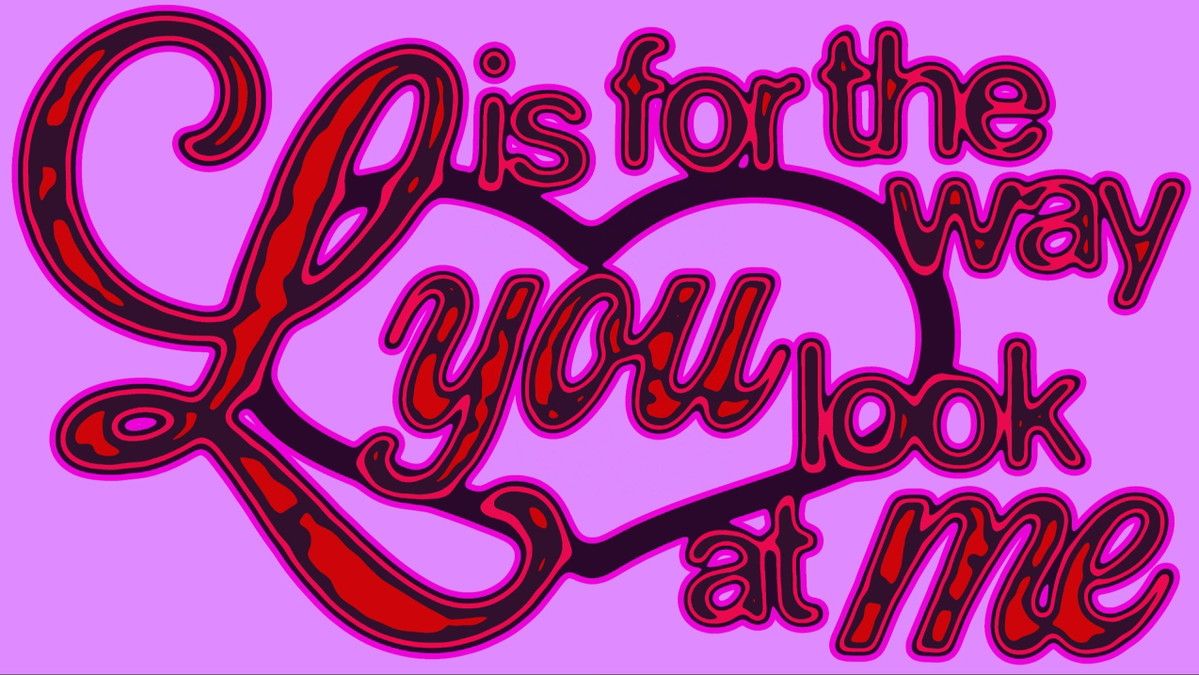
L is for the Way You Look at Me II
In the organizer's words:
L is for the Way You Look at Me II
Discursive Program
Through workshops, lectures, performances, and other collaborative activities, the discourse seriesL is for the Way You Look at Merethinks the concept of love. Building on the first edition, which sought to understand love and intimacy through the invisible entanglement of microbial interactions, this year’s event continues the exploration of love by considering the senses and sensibilities in relation to the physical—as larger bodies within the network of microorganic systems. The focus on the physical as permeable, transformative, and cross-species fosters an understanding of the self as a complex landscape interwoven with other bodies, feelings, stories, and rhythms.
From single-celled organisms to multicellular bodies, the “Life” series traces life not merely in terms of evolutionary linearity, but also in terms of how it—embedded in a process of transformation—emerged through a radical fusion of living matter. According to the theory of symbiogenesis, the origin of complex life on Earth dates back to the Precambrian era, when a nucleus-less “prokaryotic” cell, driven by biological impulses, engulfed a smaller bacterium. Due to digestive difficulties, the two organisms formed a symbiotic union and ultimately created a hybrid, nucleated “eukaryotic” cell, which constitutes the basic cellular unit of all animals, plants, fungi, and protists.[1]This fusion process, which took place about three trillion years ago, continues to this day and provides the cellular basis for nearly all living organisms: Plant cells integrate photosynthetic bacteria to absorb nutrients and breathe; corals incorporate photosynthetic algae to generate energy; and our intestines harbor a multitude of bacteria for digestion. This process of mutual interpenetration—which consists partly of the breaking down of membranes and partly of reproduction,[2]partly through digestion, and partly through a protective function, takes place at the cellular level in living organisms and forms the basis of all life—in the constant deformation and reshaping of fluid body contours.
About 4.5 trillion years ago, a comparable fusion occurred: a violent collision between the planets Theia and Earth caused the Earth’s mantle to rupture, allowing a large portion of Theia to penetrate the Earth’s core. The debris from the planets ultimately coalesced into the moon that orbits Earth. This scientific theory[3]of the Moon’s formation, dating from 2022, tells a story similar to that of the symbiogenesis of cells: the cross-boundary interactions between different forms as the starting point for the transformation of life and evolution. The Earth-Moon system[4]sets planetary forces in motion, thereby creating long-period tides that shape Earth’s ecologies and within which these gravitational forces create the conditions for cell collisions and hybridization to occur. Within this framework, single-celled organisms eventually emerged—organisms that fuse, encounter one another, repel one another, feed, reproduce, and die—that are and will be. Over the course of millions of years, they have evolved into various living beings, including humans.
Bodies—human and nonhuman, microbial and planetary—are interwoven in a network of codependent relationships. They are simultaneously hosts and participants in a series of activities in which skin breaks open, genes are exchanged, and forms transform in order to carry out metabolic processes, survive, reproduce, and evolve. This shared kinship at the cellular level between different bodies weaves threads of connection between the various realms of life, much like the interplanetary tides that link life on Earth through oceanic rhythms, lunar cycles, heartbeats, breathing, and blood flow. Drawing on this web of relationships,*L is for the Way You Look at Me II*viewsthephysical body as an ecological space connected to—and resonating within—the web of life. Drawing on female, queer, wounded, and healing bodies, the program moves between food cultures and healing practices, astrology and agriculture, music and poetry, to explore how bodies attune themselves to the world and give it meaning.
The program, which takes place this year in the summer, fall, and winter and addresses themes such asthe more-than-human, medical cosmologies, interiority, and darkness, invites the audience to experience the body through different temperatures, temporalities, heartbeats, and melodies. It highlights the body as a multisensory gateway through which we embark on life’s journey—a journey that allows us to grow and awakens indescribable physical longings: to feel, to touch, and to connect with other rhythms and beats—a life impulse that we sometimes call love.
[1]Lynn Margulis and Dorion Sagan,*What Is Life?*, New York: Simon & Schuster, 1995, pp. 113–144.
[2]Lynn Margulis describes symbiogenesis or endosymbiosis as “a long-lasting sexual encounter, except that the participants are members of different species”; see Lynn Margulis and Dorion Sagan,*What Is Life?*, Berkeley and Los Angeles: University of California Press, 1995, p. 120.
[3]J. A. Kegerreis, S. Ruiz-Bonilla, V. R. Eke, R. J. Massey, T. D. Sandnes, and L. F. A. Teodoro, “Immediate Origin of the Moon as a Post-impact Satellite,” *The Astrophysical Journal Letters* 937/2 (2022).
[4]C. R. Bern, “The Moon and the Origin of Life,” in Earth-Moon Relationships, New York: Springer Science+Business Media, 2001, pp. 61–66.
With:
Nina Lykke, Edoardo Micheli, Jennifer de Negri, Umico Niwa, andxindi
Location
You might enjoy this as well?







Noch mehr Events dieser Location-Page